Here is the number that keeps sales leaders awake: 78% of customers buy from the first company that responds, according to the MIT Lead Response Management Study. Yet the average business takes more than 40 hours to follow up. If your leads arrive at 11pm and your reps log in at 9am, you are losing deals you already paid to generate.
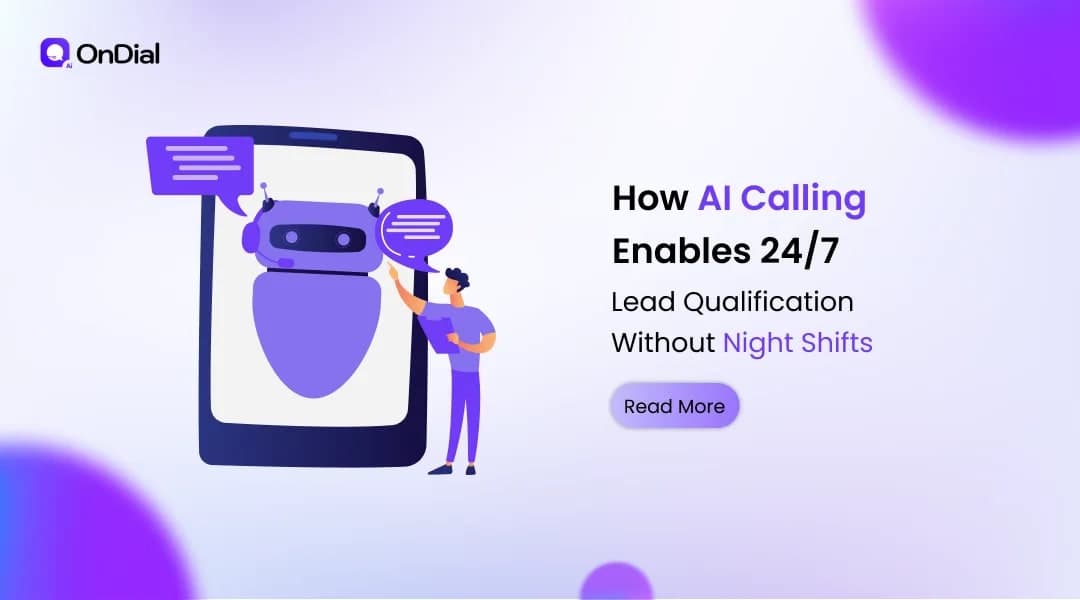
24/7 lead qualification with AI calling closes that gap. It answers, screens, and scores every lead the moment it arrives, day or night, without asking anyone to work an overnight shift. I have watched this play out across OnDial deployments, and the relief when a founder's 2am leads stop vanishing is real.
You are probably tired of choosing between expensive night staff and lost revenue. This guide breaks down how AI qualification works, where it beats human-only teams, the after-hours handoff problem nobody warns you about, and how to stay compliant.
What 24/7 Lead Qualification Actually Means
Most teams think "always-on" simply means the phone gets answered at night. It means much more than that.
24/7 lead qualification is the practice of contacting, screening, and scoring every inbound or outbound lead automatically at any hour, using AI voice agents instead of shift-based staff. It captures intent the instant a lead arrives, then routes sales-ready prospects to your reps with full context the next morning.
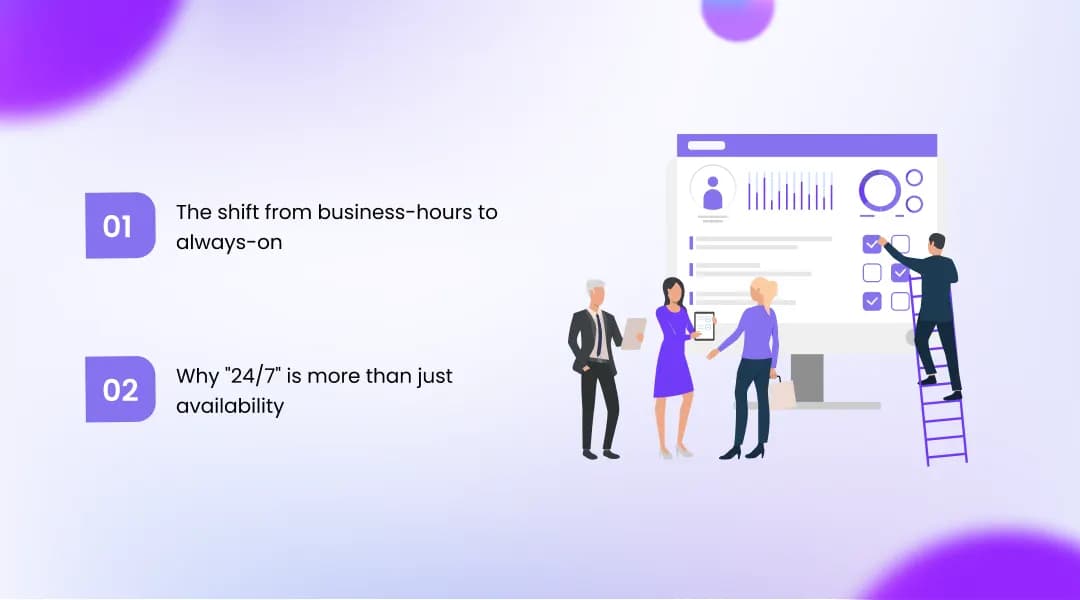
The shift from business-hours to always-on
For decades, lead qualification was bound to office hours. A form filled at midnight sat in a queue until someone clocked in. By then, the prospect had often called three competitors and signed with the fastest.
AI calling removes the queue entirely. The lead gets a real conversation within seconds, not a "we will get back to you" auto-reply.
Why "24/7" is more than just availability
Availability is the easy part. Any voicemail box is available. The hard part is useful work at 3am: asking the right questions, capturing budget and timeline, and deciding who deserves a human.
A good system handles all of that unattended, applying the same qualifying criteria at 3am that your best rep applies at 3pm. Consistency, not just uptime, is the real prize here.
How AI Voice Agents Qualify Leads in Real Time
Let me pull back the curtain on AI voice agent lead qualification, because the magic is mostly good engineering.
An AI voice agent is software that holds real, two-way phone conversations, asks qualifying questions, and decides which leads deserve a human. It is not a recorded menu. It listens, adapts, and responds to what the prospect actually says.
The anatomy of an AI qualification call
A single call usually moves through four stages, each built to feel natural rather than scripted:
Greeting and intent: The agent identifies why the prospect reached out and reads their urgency from the first few sentences.
Discovery: It asks structured questions about budget, need, and timeline, often using a BANT or custom framework.
Scoring: It assigns a lead score against your predefined criteria, separating high-intent buyers from casual browsers.
Routing: It books a meeting or hands the prospect off, with the full transcript attached.
The conversation adapts when someone changes the subject, which is what makes it feel human, not like an IVR tree.
Scoring and routing with your CRM
Qualification is worthless if the data dies on the call. So every interaction syncs straight into your CRM.
In OnDial deployments, the agent logs the transcript, tags the intent signals, and pushes the scored lead into HubSpot or Salesforce automatically. Your reps wake up to a sorted pipeline, not a pile of voicemails with no notes attached.
Why Speed to Lead Decides Who Wins
Here is a question worth sitting with: how many of your best leads went cold simply because you replied second?
Speed to lead is the time between a prospect raising their hand and your first meaningful response. It is, by a wide margin, the metric most correlated with whether you win the deal.
The 78% rule and the cost of waiting
The data is brutal and consistent. Responding within five minutes makes you 21 times more likely to qualify a lead than waiting 30 minutes, per the MIT Lead Response Management Study.
Meanwhile, the average company takes more than 40 hours to respond, and many leads never get a reply at all. The 78% who buy from the first responder are not waiting for your morning standup.
How instant response changes night and weekend math
Think about where your leads actually arrive. Evenings. Weekends. The exact windows when no human is at a desk.
When an AI agent answers in under a minute, your "dead" hours become your most productive ones. Velocify research found that responding within the first minute can lift conversions by 391%. You are not adding leads here. You are stopping the ones you already have from leaking out overnight.
The Night Shift Paradox Nobody Talks About
Here is the uncomfortable truth most vendors skip: an AI that qualifies leads 24/7 does not mean your sales problem is solved at 24/7.
Because qualifying a hot lead at 2am is only half the job. Someone still has to act on it.
What happens to a hot lead at 2am
Picture a high-intent buyer who calls at 2am, gets perfectly qualified by your AI, and is ready to talk numbers. Your closers are asleep. Now what?
If the answer is "they wait in a queue until 9am," you have rebuilt the exact delay you were trying to kill. The lead was hot at 2am. By morning, they have cooled or called someone open. After-hours lead qualification without an after-hours plan just moves the bottleneck.
Designing the after-hours handoff so leads don't die
I push every client to design this before launch, not after. The fix is a tiered wake-up rule based on lead score.
Genuinely hot leads: Trigger an instant SMS or callback offer, and optionally page an on-call rep for high-value deals.
Warm leads: Book a confirmed morning slot during the call, so the prospect feels handled, not parked.
Cool leads: Nurture automatically and surface them in the morning queue.
(This is the difference between "we have AI" and "we have a system." Most teams find out the hard way.) Build the handoff logic first, and the 24/7 promise actually holds.
AI vs Human Reps: The Honest Comparison
I want to be straight with you, because pretending AI wins everything helps no one. The AI lead qualification vs human question has a nuanced answer.
Where AI clearly wins
On speed, cost, and consistency, it is not close. A single agent handles hundreds of simultaneous calls without fatigue, vacation, or ramp time.
The cost gap is stark too. Industry analysis from IT Path Solutions puts AI qualification at roughly $1 to $3 per lead, versus $8 to $15 for human reps once you count salary, benefits, and downtime.
Where humans still matter
Now the honest part. AI is excellent at screening and terrible at the things that close hard deals: reading deep hesitation, building genuine rapport, navigating a messy enterprise buying committee.
The strongest results come from the blend, not the replacement. One 2026 analysis found AI for speed plus human handoff for substantive conversation produced 86% satisfaction. Use AI to qualify and route. Keep your people for the conversations where trust is won.
Staying Compliant With 24/7 Calling in India
Running lead qualification automation around the clock in India is legal, but only if you respect the rules. This is where I have seen good campaigns shut down overnight.
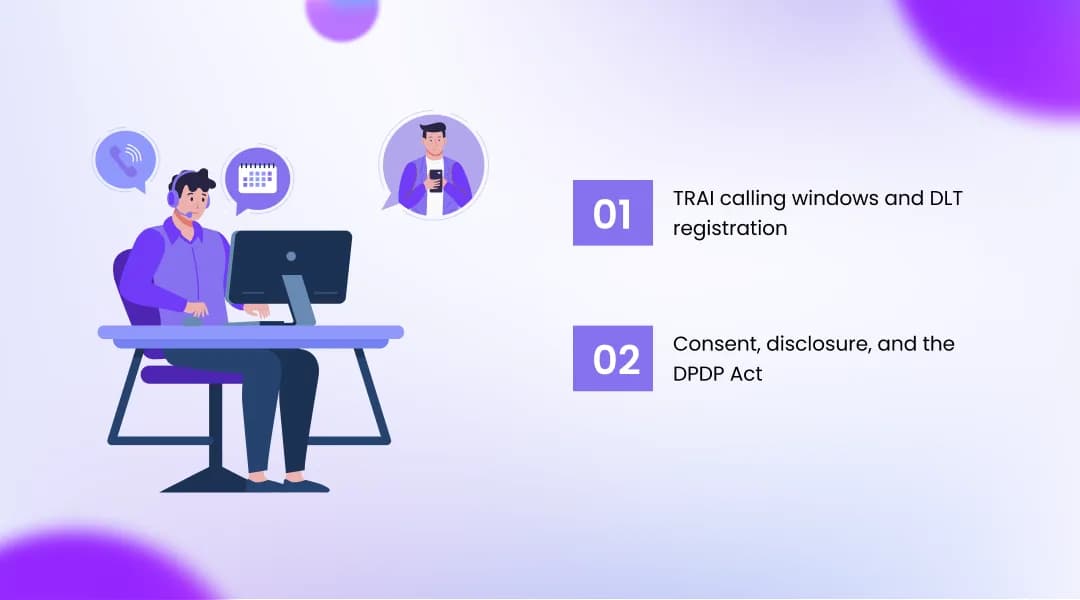
TRAI calling windows and DLT registration
Every business making commercial calls in India, human or AI, must register on the TRAI DLT platform as a Principal Entity. Your number series matters too: 140 and 160 ranges carry specific meanings for promotional and service traffic.
Enforcement is no longer passive. TRAI now uses automated detection to flag bulk calling patterns, and in early 2026 tens of thousands of numbers were disconnected, many belonging to legitimate businesses with sloppy registration. Promotional calling hours are restricted, so "24/7 outbound to everyone" is not your plan. Inbound qualification and consented callbacks are where after-hours volume lives.
Consent, disclosure, and the DPDP Act
Beyond telecom rules, the DPDP Act governs how you capture and store the personal data from every call. That means informed consent before dialing and honoring erasure requests, with penalties that can reach hundreds of crores.
A growing expectation is AI disclosure: telling the prospect they are speaking with an automated agent. We covered this in depth in OnDial's guide to TRAI rules and consent, and my advice is simple. Build disclosure and consent into the script now, before the regulator forces it.
Conclusion
24/7 lead qualification is no longer a luxury reserved for companies with overnight call centers. Three things decide whether it works for you: respond first because 78% of buyers reward speed, design a real after-hours handoff so hot leads never wait until morning, and build TRAI and DPDP compliance in from day one.
Do those, and you stop bleeding the leads you already paid to generate, without asking anyone to work nights. You do not need more headcount. You need a system that never sleeps and knows exactly when to wake a human.
If you want to map your own after-hours qualification flow, the team at OnDial builds tailored voice AI for precisely this, compliance included. Start with the leads you are losing tonight.