Indian lenders are carrying roughly ₹3.8 lakh crore in gross NPAs across the NBFC sector as of Q4 FY25, according to data compiled by CarmaOne. That number is not a collections problem. It is a conversation problem. Behind every overdue account is a borrower who is dreading a phone call, and a tele-caller who is dreading making it.
If you run collections, you already know the tension. You need to recover dues, but every aggressive call risks an RBI complaint, a damaged relationship, or a borrower who simply stops picking up. AI voice agents for loan recovery are changing that math, not by shouting louder, but by making the call calmer.
Here is the short version: a well-built AI agent calls borrowers within legal hours, stays perfectly polite under pressure, captures payment commitments, and escalates anything sensitive to a human. No fatigue. No threats. No 6:30 AM calls.
I have spent years at OnDial building voice AI for Indian businesses, and recovery is where the awkwardness problem is sharpest. This guide covers how these agents work, whether they are RBI compliant, why borrowers often find them easier to talk to, and how they compare to human callers.
Why Loan Recovery Calls Feel So Awkward in the First Place
The awkwardness is not a side effect. It is built into the old model.
The Human Cost on Both Sides of the Line
Traditional recovery puts two stressed people on one call. Agent churn in collections sits near 31% globally, which tells you how draining the work is. A tired agent under monthly targets is exactly the person most likely to slip into the tone RBI warns against.
In India, debt also carries heavy social stigma. As Rootle's BFSI analysis notes, most borrowers do not default because they want to. They default because life happened: a medical emergency, a lost job, a delayed salary. A blunt call lands on someone already ashamed, and shame makes people hide rather than pay.
Why Borrowers Stop Answering
Think about your own phone for a second. When an unknown number rings twice in the morning, do you pick up?
Most people do not. Smartphone features that silence unknown callers have quietly broken the old "dial more, recover more" approach. Borrowers screen, ignore, and avoid, which pushes accounts from a gentle early-stage delinquency reminder into something far harder to recover.
How AI Voice Agents Work for Loan Recovery
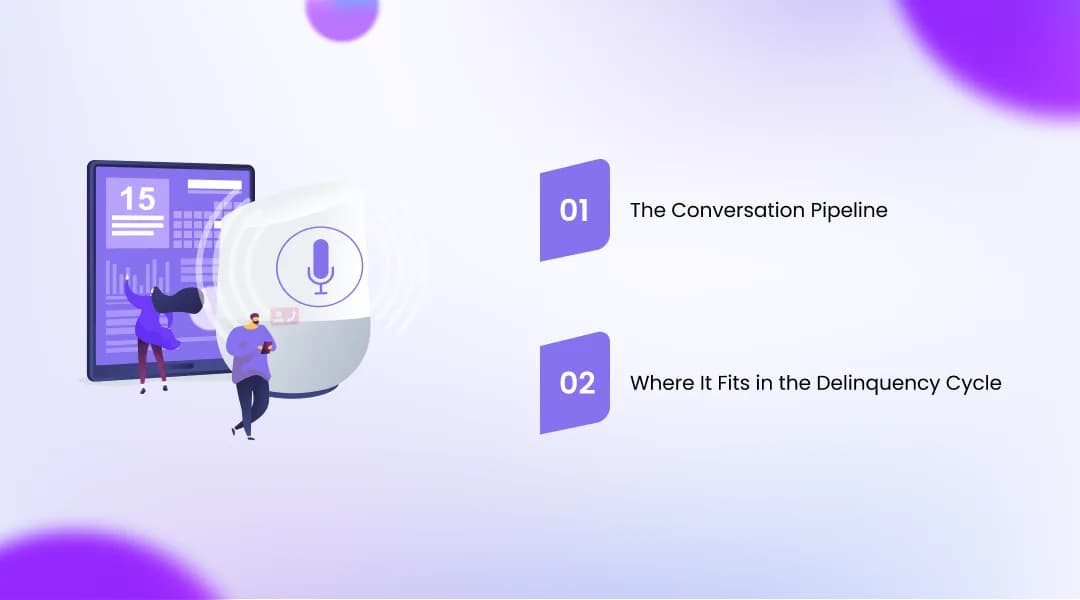
AI voice agents for loan recovery are software callers that hold natural spoken conversations with borrowers, deliver reminders, capture payment intent, and log every outcome automatically.
The Conversation Pipeline
A recovery agent is not a one-way robocall. It is a structured pipeline built around the legal and conversational needs of collections. The flow usually runs like this:
Identity verification: The agent confirms it is speaking to the right borrower before disclosing any account details, protecting you from a privacy violation.
Disclosure: It states the lender's name, purpose, and outstanding amount in the borrower's preferred language.
Negotiation: It offers pre-approved repayment options and captures a promise-to-pay (PTP), then sends a payment link by SMS or WhatsApp.
Logging: Every call updates the loan management system with the outcome and a full recording.
Where It Fits in the Delinquency Cycle
The smartest deployments target the early buckets. Under RBI norms, accounts move through SMA-0 (1-30 days past due), SMA-1, and SMA-2 before turning into an NPA at 90 days overdue.
That early window is gold. CarmaOne's India data shows DPD 1-30 recovery rates of 75-85%, because these borrowers usually just forgot. Letting an AI agent handle this high-volume, low-complexity outreach frees your human team for the genuinely hard cases. (This single design choice is where most of the value hides.)
Are AI Loan Recovery Calls RBI-Compliant in India?
This is the question every credit-ops leader asks first, and rightly so.
What the Rules Actually Require
Yes, AI voice agents can be fully RBI compliant, and in practice they often hold the line better than humans. The RBI Fair Practices Code prohibits intimidation and bars recovery calls before 8 AM or after 7 PM. A human agent can forget that at the end of a long shift. An AI agent simply cannot dial outside the window.
Right-party contact and mandatory disclosures are the other common failure points. Because the agent never skips a disclosure, one of the most frequent sources of Banking Ombudsman complaints quietly disappears.
Data Protection Cannot Be an Afterthought
Compliance now goes beyond calling hours. The DPDP Act 2023 is rolling out in phases, with later obligations expanding through late 2026, adding consent capture, data minimisation, and deletion rights to every interaction.
A serious recovery agent records consent at call open, processes only what the purpose requires, and keeps a timestamped audit trail tied to the loan account. I will be honest about the limit here: the technology makes compliance easy to enforce, but you still own the policy. The agent follows the script you approve, so the script has to be right.
Why an AI Call Often Feels Less Awkward Than a Human One
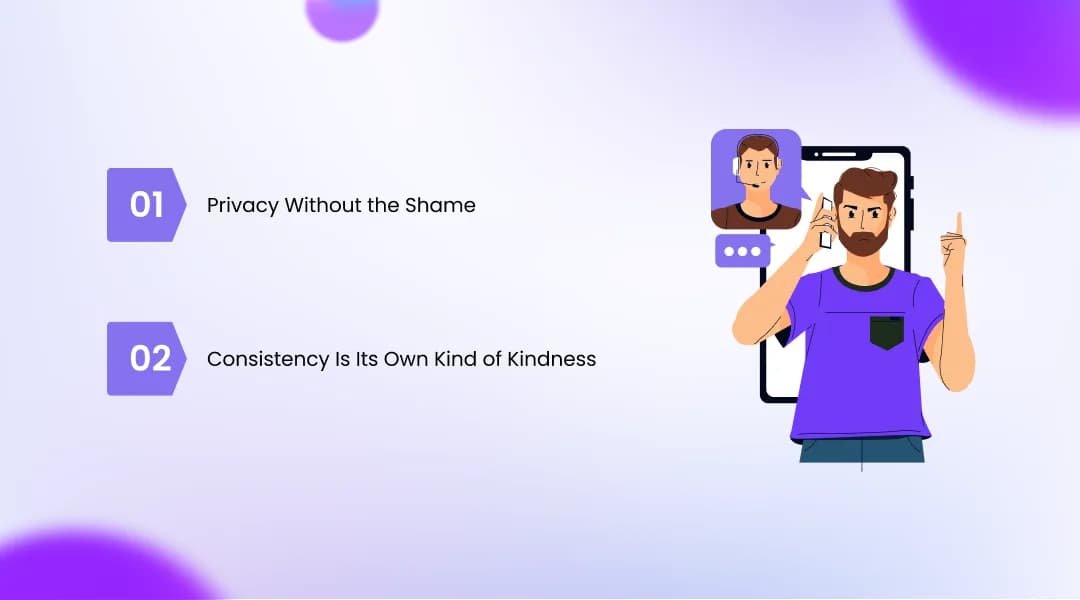
Here is the counter-intuitive part. Borrowers frequently prefer talking to a machine about money they owe.
Privacy Without the Shame
A borrower can sort out a missed EMI at 9 PM from their couch, in their own language, without a stranger hearing the strain in their voice. There is no human judgment on the line. For someone carrying the stigma of default, that anonymity lowers the wall.
That is the real shift. When you chase with a hammer, people hide. When the call is private, patient, and non-judgmental, they actually talk.
Consistency Is Its Own Kind of Kindness
An AI agent never has a bad day. It does not get sarcastic on the fortieth call or sigh when a borrower asks the same question twice.
Empathetic borrower experience is not a soft metric anymore. A consistent, calm tone protects your brand on every single call, not just the ones a supervisor happens to monitor. At OnDial, we build these flows to sound human and respectful by default, because a recovery call is still a customer relationship.
AI vs Human Collection Agents: The Honest Comparison
Choosing between AI vs human collection agents is not really a choice. The strong model uses both.
The Numbers Worth Knowing
The economics are hard to argue with. A human collector manages only 80-100 connected calls a day, while one AI agent absorbs the workload of five to seven callers, per CarmaOne's 2026 analysis. Cost-per-recovery drops from ₹15 and above toward ₹5-8, by Rootle's estimates.
Scale matters at the margins, too. For a mid-sized NBFC, even a one-percentage-point lift in right-party contact can translate into crores recovered over a year. Gartner has projected that conversational AI will cut contact-centre labour costs by 80 billion dollars in 2026.
Where Humans Still Win
But automation is not a full replacement, and anyone who tells you otherwise is selling something.
Complex restructuring, genuine hardship, disputes, and emotionally charged accounts need a person. The right setup lets the AI handle volume and reminders, then escalates the moment a conversation needs judgment. Machine for the routine. Human for the rare.
Conclusion
AI voice agents for loan recovery are not a colder version of the collections call. They are a calmer, more compliant, and frankly more humane one. The three things to remember: they hold RBI compliance automatically, they recover faster in early delinquency, and they give borrowers a private way to resolve dues without the dread.
You do not have to choose between recovering money and treating people well. The awkward call was never the only option, and now it is not the default one either.
If you are weighing how this fits your collections stack, OnDial builds tailored voice AI agents designed for Indian compliance and real borrower conversations, not generic scripts. Tell us your delinquency buckets and language mix, and we will map where automation actually moves your recovery rate.