I’ll be honest with you.
For years, “automated calling systems” were… painful. Robotic voices. Endless menus. Customers pressing “0” like it’s a panic button.
I’ve built those systems. I’ve debugged them at 2 AM. I’ve heard the complaints.
And then something changed.
AI Call Assistants in 2026 aren’t just better IVRs. They’re something else entirely. They listen. They respond. They adapt. And sometimes this is the weird part people don’t even realize they’re talking to AI.
Let me show you why.
What is an AI Call Assistant?
Simple Definition
An AI Call Assistant is a voice-based software system that can handle real phone conversations with customers using speech recognition, natural language understanding, and human-like voice responses.
Not menus. Not scripts.
Actual conversations.
(Yes, that still surprises people.)
Real-Life Example
Imagine this:
A customer calls your business at 11:47 PM.
Instead of voicemail, they hear:
“Hi! How can I help you today?”
They ask about pricing. The AI answers. They want to book a demo. Done. Calendar scheduled.
No human involved. No delay.
Now ask yourself
How many leads are you missing after business hours?
How AI Call Assistants Work

This is where most articles get vague. I won’t.
Let’s break it down like an engineer.
Speech Recognition
The system converts the caller’s voice into text in real-time.
Accuracy in 2026? Scary good. Even with accents. Even with background noise.
NLP Understanding
This is where intent is decoded.
Not just words. Meaning.
“I want to cancel my subscription” isn’t just text it’s an action trigger.
Response Generation
The system decides what to say next.
Sometimes it pulls from predefined workflows. Sometimes it generates dynamic responses based on context.
Text-to-Speech
Finally, it speaks back.
And no it doesn’t sound like a robot anymore. Modern systems sound… human.
(Uncomfortably human, if I’m being honest.)
Key Features of AI Call Assistants
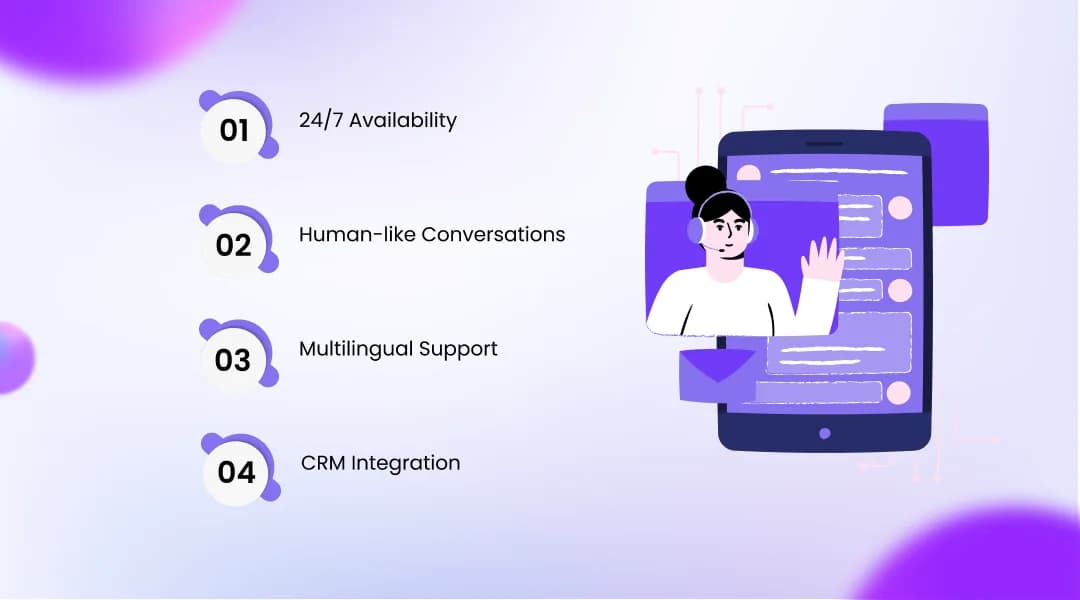
24/7 Availability
No shifts. No breaks. No missed calls.
Ever.
Human-like Conversations
This is the big leap.
Modern AI Call Assistants don’t just respond they converse. They pause. They clarify. They even handle interruptions.
Multilingual Support
India alone has dozens of languages in active use.
AI handles that. Instantly.
CRM Integration
Every call gets logged. Tagged. Stored.
Your CRM becomes a living memory of conversations not just data.
Benefits of AI Call Assistants for Businesses
Cost Reduction
Let’s talk numbers.
Hiring, training, attrition, infrastructure it adds up.
AI doesn’t replace teams entirely. But it reduces load dramatically.
Faster Response Time
Customers don’t wait.
And in business, speed isn’t nice-to-have. It’s revenue.
Scalability
10 calls or 10,000 calls?
Same system. Same performance.
That’s not efficiency. That’s a structural advantage.
Improved Customer Experience
Here’s the twist
People don’t hate AI.
They hate bad experiences.
Good AI feels fast. Clear. Helpful.
That’s all customers ever wanted.
AI Call Assistant vs Human Agents
Let’s not pretend this is a fair fight.
Speed
AI wins. Instantly.
Cost
AI wins again.
Accuracy
AI is consistent. Humans vary.
Limitations
Here’s where humans still matter.
Empathy. Complex reasoning. Emotional nuance.
(And yes, angry customers.)
The real answer?
It’s not AI vs humans.
It’s AI + humans.
Use Cases of AI Call Assistants
Customer Support
Answer FAQs. Resolve basic issues. Route complex ones.
Sales Calls
Qualify leads. Answer objections. Book demos.
Appointment Booking
Healthcare. Salons. Real estate.
Scheduling becomes effortless.
Lead Qualification
This is underrated.
AI filters serious prospects from casual inquiries before your team even steps in.
Best AI Call Assistant Tools in 2026
Let’s cut through the noise.
Your Product (KriraAI)
If you're building in India, you already know the challenge—languages, scale, and real-world chaos.
KriraAI focuses on practical voice automation that works in messy, real environments. Not just demos.
Competitors
Global AI voice platforms (highly advanced, expensive)
Niche SaaS tools (good for specific use cases)
Legacy IVR systems trying to stay relevant
And then there are emerging platforms like AI Call Agents that blend automation with workflow intelligence.
(Choose based on your use case not hype.)
Industries Using AI Call Assistants
Healthcare
Appointment booking. Patient follow-ups. Reminders.
Real Estate
Lead handling. Site visit scheduling.
E-commerce
Order tracking. Returns. Customer queries.
Finance
Loan inquiries. KYC support. Account assistance.
If your business involves calls… this applies to you.
Challenges & Limitations
Let’s not romanticize this.
Complex Queries
AI struggles when conversations go off-script in unpredictable ways.
Emotional Intelligence
It can simulate empathy.
But real human emotion? Not quite there yet.
Setup Cost
Good systems aren’t cheap upfront.
But here’s the thing—
Bad systems are expensive long-term.
Future of AI Call Assistants
This is where it gets interesting.
AI + Human Hybrid Model
AI handles volume. Humans handle complexity.
That’s the winning formula I’ve seen repeatedly.
Hyper-Personalization
Imagine AI remembering every customer interaction.
Not just data. Context.
Voice Commerce
People will buy products… through conversations.
No screens. Just voice.
Sounds futuristic?
It’s already happening.
Conclusion
I’ve been around long enough to see tech cycles come and go.
Most overpromise. Many underdeliver.
AI Call Assistants?
They’re different.
Not perfect. Not magical.
But practical. Scalable. And finally useful.
So here’s my question to you
Are you waiting for this to mature… or are you already late?