When Cricut deployed Zoom's AI-powered sentiment analysis, their call abandonment rate dropped by 90%, according to a case study reported by SixEleven BPO. That is not a typo. Nine out of ten callers who used to hang up in frustration stuck around instead.
If you have heard the buzz around sentiment analysis in AI calls and quietly wondered whether it is real or just another shiny dashboard, you are not alone. Most CX leaders I talk to are skeptical, and honestly, they should be. So here is the plain version. Sentiment analysis in AI calls uses NLP and voice signals to detect how a customer feels during a conversation, so teams can respond before a small annoyance turns into a lost account.
That is the whole promise in one sentence. The rest is detail, and detail is where the value (or the disappointment) lives. At OnDial, building voice AI for Indian businesses, I have seen this technology shine and I have seen it stumble. Here is what genuinely works, what the numbers say, and where you should keep your expectations grounded.
What Sentiment Analysis in AI Calls Actually Does
Let me start with the question Google answers directly, because if your understanding here is fuzzy, everything downstream gets fuzzy too. This is also the real-time sentiment detection piece most people get half-right.
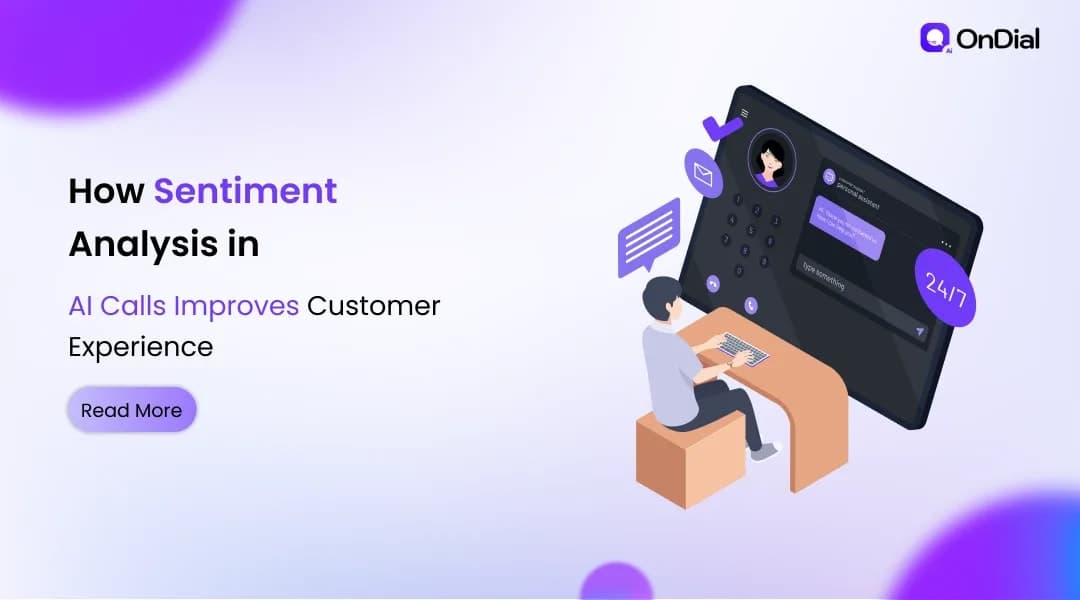
Sentiment analysis in AI calls is the use of AI to detect a caller's emotional state from their words, tone, and speech patterns during a phone conversation. It scores each moment as positive, negative, or neutral, and flags emotional shifts as they happen.
Reading Tone, Not Just Words
Here is the part people miss. Early tools only scanned transcripts for angry keywords. Modern systems go further, combining Automatic Speech Recognition (ASR) with prosody, the pitch, pace, and volume of a voice. A caller can say "everything's fine" while their tone screams otherwise, and the AI catches that gap.
That layered approach matters because emotion lives in delivery, not vocabulary. Voice sentiment analysis blends acoustic cues with NLP and speaker diarization to separate the customer's emotion from the agent's. (This is also why text-only chatbots miss so much. They are reading a script with the soundtrack switched off.)
Real-Time Detection vs Post-Call Analysis
There are two flavors, and confusing them leads to bad buying decisions. Post-call analysis reviews finished conversations to spot trends, score quality, and surface recurring complaints. It is reflective. It tells you what already went wrong.
Real-time detection works mid-call, alerting a supervisor or nudging the agent the instant sentiment dips. The difference is the difference between an autopsy and an ambulance. Both have their place, but only one saves the call you are on right now.
How It Actually Improves Customer Experience
Counter to the hype, the win is rarely "the AI fixes the customer." The real emotion AI payoff is timing. It buys your team the seconds they need to act like humans before a moment slips away.
Catching Frustration Before It Becomes Churn
Frustration is expensive. Broadvoice reports that churn jumps 73% when customers go through multiple negative interactions. The trouble is that most teams only learn about those interactions weeks later, from a survey almost nobody fills out.
Real-time reducing customer churn works by closing that gap. When sentiment drops, the system can reroute the call, surface a retention offer, or alert a supervisor to step in. In projects we have worked on at OnDial, the single biggest lift came not from clever automation but from simply knowing which calls were going sideways while they were still live.
Coaching Agents While the Call Is Still Live
Should you trust AI to read customer emotions instead of your best agents? No. You should use it to make every agent perform closer to your best one. That is real-time agent coaching in practice.
When the AI flags rising tension, an agent assist tool can prompt the rep to slow down, acknowledge the issue, or offer a fix. WifiTalents' 2026 data found that using AI for sentiment analysis improves First-Call Resolution by 15%. Resolve it the first time, and you have done more for customer experience than any apology script ever could.
The Honest Limits Nobody Talks About
Now the part the glossy guides skip. Sentiment analysis is genuinely useful, and it is also routinely oversold. If you deploy it expecting a flawless emotion reader, you will be disappointed, and your agents will stop trusting the alerts.
Accuracy Across Accents and Languages
This one is personal for us. Voice sentiment models trained mostly on American English struggle with Indian accents, code-switching between Hindi and English, and noisy line conditions. A model that nails sentiment in a clean Silicon Valley demo can misfire badly on a real call from a Tier-2 city.
So accuracy is contextual, not universal. We treat scores as signals, not verdicts, and we test models against the actual languages our clients' customers speak. There is also a trust dimension worth naming: under India's DPDP Act, monitoring emotional data responsibly means transparency about what you collect and why.
Why Humans Stay in the Loop
Here is the counter-intuitive truth. The best sentiment systems make the AI quieter, not louder. Google Cloud's own Agent Assist guidance centers human-in-the-loop support, where the rep stays in charge and the AI improves timing and recall.
Treating a sentiment score as the final word on a person's feelings is where teams go wrong. It estimates patterns correlated with frustration or satisfaction. It does not read minds. Keep a human deciding what to do with the signal, and the technology earns its keep.
Conclusion
Used well, sentiment analysis in AI calls does something simple and powerful: it gives your team the timing to respond like humans before a frustrated caller becomes a lost one. The three things worth remembering are that real-time beats post-call for saving live conversations, that the real win is faster human intervention rather than automation, and that accuracy depends heavily on the accents and languages your customers actually use.
You should walk away clear-eyed, not starry-eyed. This technology is a strong signal, not a crystal ball.
If you run calls across India's many languages and want voice AI that is tested against how your customers really speak, that is exactly the problem we solve at OnDial. Let's talk about what your call data is already telling you.