Let me guess.
You’ve heard the pitch: “AI voice will replace call centers.” Or maybe: “It sounds exactly like a human.”
And your internal reaction?
“Yeah… sure.”
I’ve been there. Years ago, I was the guy rolling my eyes at these claims. Then I started building these systems. Then deploying them. Then watching them break in real-world conditions.
That’s when things got interesting.
Because here’s the truth no one tells you:
AI voice technology isn’t magic. But when done right? It’s brutally effective.
Let’s strip the hype and get to what actually matters.
What Is AI Voice Technology?
Definition
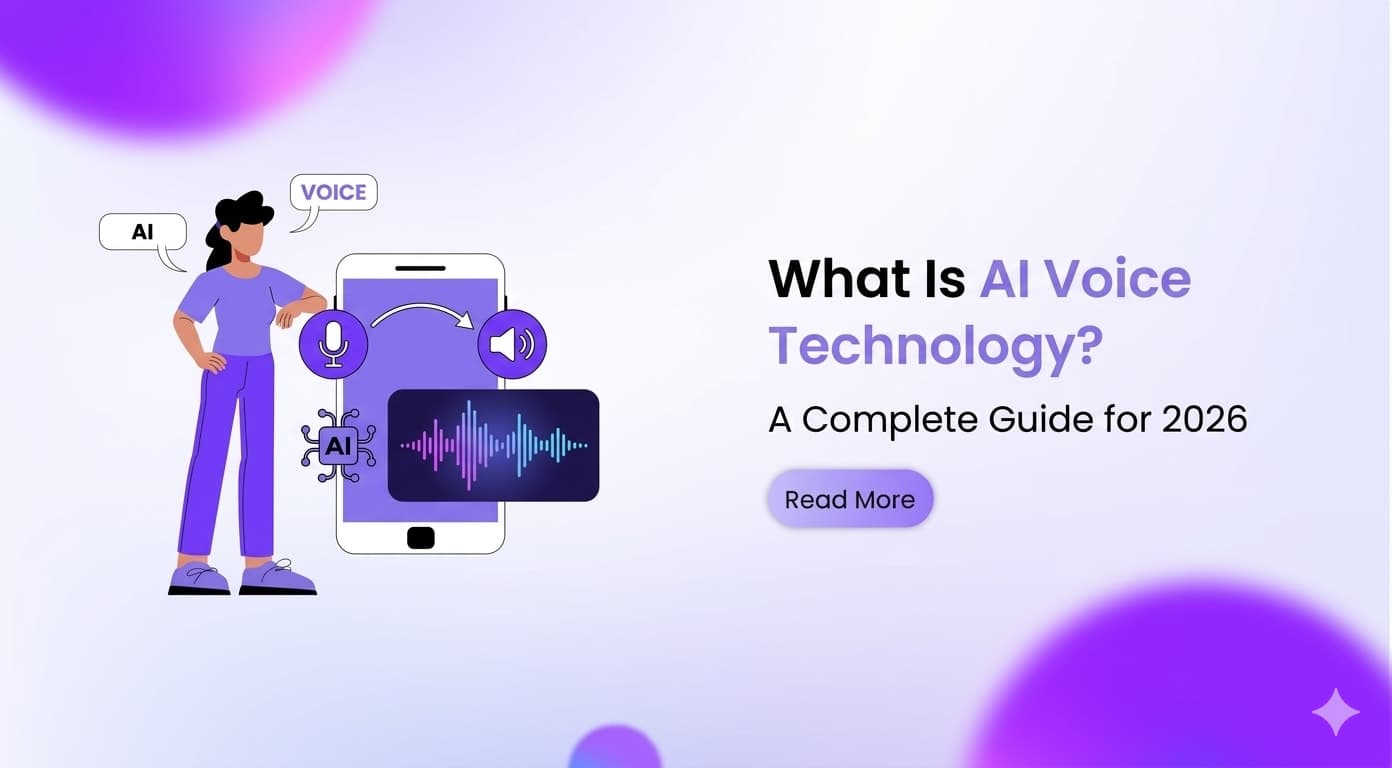
AI Voice Technology is the combination of systems that allow machines to understand, process, and respond to human speech in a natural, conversational way.
Not robotic menus. Not “Press 1 for support.”
Actual conversations.
Think about it like this: A human speaks → the system understands → thinks → responds → all in seconds.
That loop? That’s the core.
Difference Between Voice AI & Traditional IVR
Traditional IVR systems are... let’s be honest… painful.
Rigid menus
No context awareness
Zero flexibility
You say something slightly unexpected? It breaks.
AI voice systems don’t rely on rigid paths. They interpret intent.
Old IVR: “Press 2 for billing.” AI Voice: “Hey, I see you’re asking about a recent charge—let me check that for you.”
See the difference?
One forces you to adapt. The other adapts to you.
How AI Voice Technology Works
This is where most articles get vague. I won’t.
AI voice systems are built on four core layers:
Speech Recognition (ASR)
This converts spoken language into text.
Accuracy here is everything. Accents, background noise, speed it all matters.
Bad ASR = broken experience.
Natural Language Processing (NLP)
This is where meaning is extracted.
Not just words but intent.
“I want to cancel my order” vs “I think I don’t need this anymore”
Same intent. Different phrasing.
Good NLP catches that.
Text-to-Speech (TTS)
Now the system responds.
And this is where things have changed dramatically in recent years.
Modern systems don’t sound robotic anymore. They pause. Emote. Adjust tone.
(Still not perfect. But close enough to surprise people.)
AI Decision Engine
This is the brain.
It decides:
What to say
What action to take
Whether to escalate to a human
Think of it as the difference between a script reader and a trained agent.
Key Features of AI Voice Technology

Human-like Conversations
Not perfect. But fluid enough to hold real interactions.
Multi-language Support
Especially critical in markets like India.
Switching between Hindi, English, Gujarati? That’s not a bonus anymore. It’s expected.
Real-time Responses
No awkward delays. No “processing…” moments.
Just conversation.
24/7 Availability
No shifts. No fatigue. No missed calls.
Just consistency.
Benefits of AI Voice Technology for Businesses
Let’s talk outcomes. Not features.
Cost Reduction
I’ve seen companies cut support costs by 40–60%.
Not by removing humans. By letting humans focus on what matters.
Faster Customer Support
No queues. No waiting music.
Instant response.
(Ask yourself how many customers do you lose just because they couldn’t get help fast enough?)
Scalability
Black Friday? Festive rush? Viral spike?
AI doesn’t panic.
Better Customer Experience
Consistency beats randomness.
Customers don’t want brilliance. They want reliability.
AI Voice Technology vs Chatbots
Here’s the honest take.
Voice vs Text Comparison
Factor | Voice AI | Chatbots |
Speed | Faster | Slower |
Accessibility | High | Medium |
Complexity | Handles nuance better | Limited |
User Effort | Low | Higher |
When to Use What
Use voice when:
Urgency matters
Users are non-technical
Calls are the primary channel
Use chatbots when:
Queries are simple
Users prefer typing
You need visual interaction
Or better yet?
Use both.
Real-World Use Cases

This is where things get real.
Customer Support Automation
Handling FAQs, complaints, order issues.
Sales Calls & Lead Qualification
AI can pre-qualify leads before your team steps in.
No more wasted calls.
Appointment Booking
Healthcare. Salons. Services.
Simple. Repeatable. Perfect for automation.
E-commerce Order Tracking
“Where is my order?”
Probably the most common support query on the planet.
Top AI Voice Tools & Platforms in 2026
I’ll be blunt.
Most tools look great in demos. Few survive real-world usage.
Here’s what to look for:
Strong ASR accuracy in local languages
Flexible integration APIs
Real conversation memory
Transparent pricing
Companies like OnDial are focusing on custom-built voice systems, not one-size-fits-all tools and that’s where things actually start working in production.
Challenges & Limitations
Let’s not pretend it’s perfect.
Accuracy Issues
Noise, accents, slang it still struggles sometimes.
Privacy Concerns
Voice data is sensitive.
You need clear policies. No shortcuts here.
Integration Complexity
Connecting with CRMs, databases, workflows?
That’s where most projects slow down.
Future of AI Voice Technology (2026 & Beyond)
This is where things get... interesting.
Hyper-personalization
Systems that remember preferences, history, behavior.
Emotion-aware AI
Detecting frustration. Adjusting tone.
(We’re not fully there yet. But it’s coming.)
Voice Commerce
Buying directly through conversation.
No screens. Just decisions.
How to Implement AI Voice in Your Business
Here’s the part most people skip.
Step-by-Step Guide
Identify high-volume, repetitive calls
Define clear use cases
Choose the right platform or partner
Start small (seriously, don’t overbuild)
Train with real conversation data
Continuously monitor and improve
Best Practices
Don’t try to replace humans—augment them
Focus on experience, not just automation
Test aggressively before scaling
Quick question.
Are you trying to sound impressive… or actually solve a problem?
Because those two paths lead to very different outcomes.
Conclusion
AI voice technology isn’t about sounding futuristic.
It’s about solving very real, very boring problems:
Missed calls
Slow responses
Overloaded teams
And doing it consistently.
I’ve seen companies waste money chasing hype. I’ve also seen companies quietly transform their operations with the same tech.
The difference?
Clarity.
Now you have it.