A business call can be one of the highest intent signals a prospect gives you. Someone who takes the time to pick up the phone, ask a question, request a price, check availability, or discuss a service is already showing more intent than someone who simply browses a page.
Yet many businesses still treat every incoming call as a basic customer service interaction.
That creates a gap between the phone conversation and the sales pipeline. A caller may speak with an employee, leave a message, wait for a callback, or receive an answer without their information ever reaching the CRM.
AI voice agents can close that gap.
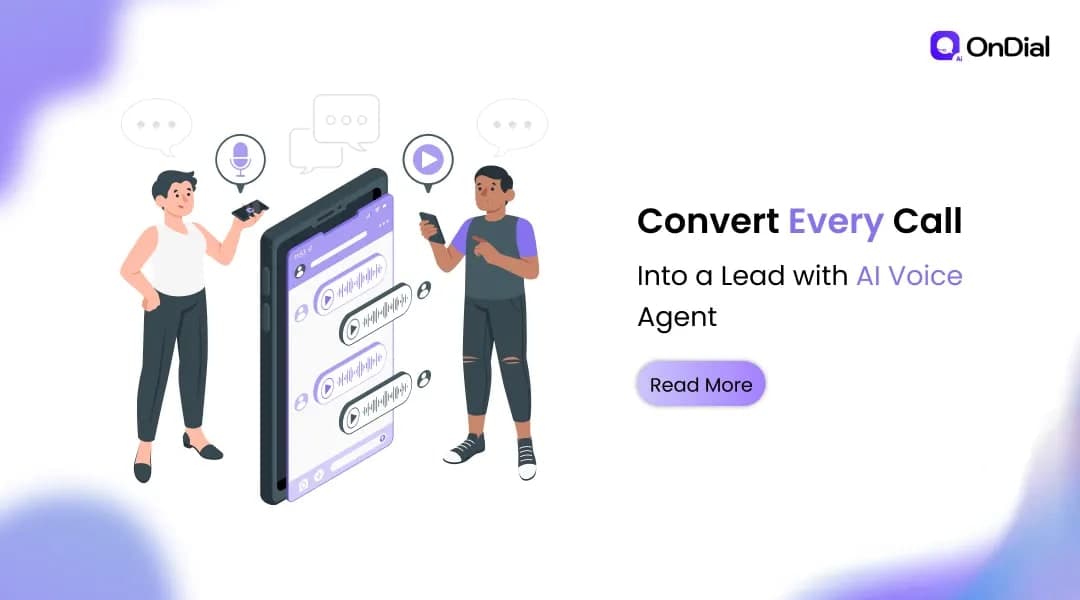
Instead of simply answering a business phone, an AI voice agent can understand why someone is calling, ask relevant questions, collect important details, qualify the opportunity, schedule the next step, update business systems, and transfer the conversation to a human when necessary.
For businesses that depend on inbound calls for revenue, this changes the role of the phone from a communication channel into a structured lead generation channel.
Why Business Calls Are Often Underused as Lead Sources
The problem is rarely the absence of customer interest.
The problem is what happens after the phone rings.
A sales team may be handling another customer. A receptionist may be unavailable. A call may arrive outside business hours. A prospect may ask several questions but never get added to the CRM.
Even when a human answers, important information can be lost.
The caller's requirements may remain inside a handwritten note. The sales representative may forget to record the conversation. The next employee may have no context about what was discussed.
This creates several points of leakage:
Missed inbound calls
Delayed callbacks
Incomplete lead information
Inconsistent qualification
Manual CRM entry
Missed appointment opportunities
Poor follow up
Repeated questions during human handoff
The result is a disconnected process.
The phone conversation happens in one place, while the sales pipeline lives somewhere else.
AI voice agents connect those two systems by turning spoken conversations into structured business actions.
How an AI Voice Agent Turns a Call Into a Lead
The most useful way to understand AI voice agents is to look at the complete workflow.
A typical call to lead process can follow these stages:
The customer calls the business.
The AI voice agent answers immediately.
The system identifies the caller's intent.
The agent asks relevant qualifying questions.
Important information is captured during the conversation.
The lead is classified according to business rules.
The CRM is updated with the conversation data.
A meeting can be scheduled when appropriate.
A qualified opportunity can be transferred to a human representative.
The conversation and outcome are recorded for analysis.
This approach makes the call useful even when the caller does not immediately become a customer.
A caller who is ready to buy can be routed to sales.
A prospect who needs more information can enter a follow up process.
A customer asking for support can be directed to the correct workflow.
The important distinction is that the AI is not merely responding. It is helping move the caller toward a defined business outcome.
The Difference Between Answering Calls and Qualifying Leads
Answering a call is only the first step.
Consider a prospect calling a real estate company.
A basic answering system might provide office hours and connect the caller to an available employee.
A lead focused AI voice agent can have a much more useful conversation.
It can ask what type of property the caller is looking for, which location they prefer, their approximate budget, their expected purchase timeline, and whether they need financing.
The same principle works in healthcare, insurance, education, automotive, financial services, logistics, and other industries.
For businesses using voice automation for sales, the goal is not to ask every caller the same list of questions. The goal is to collect the information that helps determine what should happen next.
For businesses focused on sales and lead generation, AI voice agents for sales and lead generation can support this process across inbound inquiries, qualification, follow up, appointment scheduling, and CRM capture.
What Information Should an AI Voice Agent Capture?
The information collected during a call should be directly connected to the sales or service workflow.
Depending on the business, useful information may include:
Contact Information
The agent can confirm the caller's name, phone number, email address, location, or other relevant contact details.
Customer Intent
The system should determine why the person called.
For example, the intent may be:
Requesting a quotation
Booking an appointment
Asking about a product
Requesting a service
Checking availability
Asking about an existing order
Looking for financing
Requesting a callback
Qualification Information
Qualification criteria depend on the business.
A real estate company may care about budget and location. An education company may need to understand the student's course preference and enrollment timeline. An insurance company may need information related to the policy or customer requirement.
Next Step
The conversation should end with a clear action whenever possible.
That could be a sales transfer, appointment, callback, information request, follow up, or support escalation.
This makes the call actionable rather than simply informative.
How AI Lead Qualification Improves Sales Handoffs
A common weakness in traditional sales processes is the gap between qualification and human engagement.
A salesperson receives a name and phone number but has little information about the prospect.
The representative then has to start the conversation from the beginning.
An AI voice agent can reduce this friction by passing structured information along with the lead.
For example, the sales representative could receive:
Customer name
Service requested
Location
Budget range
Purchase timeline
Key questions
Qualification result
Conversation summary
Recommended next action
This creates a warmer handoff.
The human representative can focus on the actual sales conversation instead of repeating basic discovery questions.
OnDial's AI lead qualification service is designed around this type of workflow, including qualification questions, lead scoring, CRM updates, appointment booking, and human routing.
Connecting Voice Conversations With the CRM
A lead that exists only inside a phone conversation is difficult to manage.
CRM integration changes that.
When the AI voice agent captures information during a conversation, the relevant fields can be written into the business system. This creates a record that sales and operations teams can use after the call.
The CRM can contain information such as the caller's intent, qualification status, conversation summary, appointment details, and follow up requirements.
This also makes reporting more useful.
Instead of asking how many calls were received, a business can begin asking better questions:
How many calls became qualified leads?
Which campaigns generated the most qualified callers?
How many qualified leads booked meetings?
How many calls required human escalation?
Which questions caused prospects to drop out?
Which lead sources produce the strongest opportunities?
The phone then becomes part of the measurable sales funnel.
Appointment Booking Can Remove Another Conversion Barrier
Even qualified leads can be lost after the initial conversation.
A prospect may agree to speak with a salesperson later but never receive the callback.
Scheduling can remove that extra step.
An AI voice agent can identify available appointment slots, offer suitable times, confirm the selection, and trigger the appropriate confirmation workflow.
This is especially useful for businesses where the next step is naturally a consultation, demonstration, clinic appointment, property visit, test drive, or sales meeting.
Instead of ending with "someone will call you later," the conversation can end with a confirmed next action.
When Should AI Transfer the Call to a Human?
A strong AI voice strategy does not attempt to automate every conversation.
Some calls need human judgment.
A caller may have a complex complaint, a sensitive financial question, a medical concern, an unusual requirement, or a high value sales opportunity that needs negotiation.
The AI should recognize these situations and escalate.
A good human handoff should preserve context.
The human representative should know why the caller contacted the business, what information was collected, what questions were asked, and what the caller needs next.
The customer should not have to repeat everything.
This creates a hybrid model where AI handles volume and structured interactions while humans handle complexity, empathy, negotiation, and relationship building.
Where AI Voice Agents Can Generate Leads
The call to lead model works particularly well when phone conversations are an important part of the customer journey.
Real Estate
AI voice agents can respond to property inquiries, understand buying requirements, qualify prospects, and schedule property visits.
Healthcare
They can handle appointment requests, confirmations, basic patient inquiries, and routing while escalating sensitive conversations to appropriate staff.
Insurance and Financial Services
AI can handle initial inquiries, collect relevant information, support follow up, and route qualified prospects to advisors.
Education
Education providers can use voice agents to respond to course inquiries, understand student requirements, and schedule counseling conversations.
Retail and E-commerce
Voice automation can support product inquiries, order questions, delivery information, returns, and customer follow up.
Logistics
AI voice agents can handle shipment related inquiries, delivery questions, scheduling, and status requests.
The best opportunity is usually found where call volume is high, conversations follow recognizable patterns, and there is a clear action after the interaction.
How to Measure Call to Lead Performance
Implementing an AI voice agent without measuring outcomes makes optimization difficult.
Businesses should establish a baseline before deployment and then track changes over time.
Useful metrics include:
Call Answer Rate
Measure how many inbound calls receive an immediate response.
Qualified Lead Rate
Track the percentage of calls that meet predefined qualification criteria.
Appointment Rate
Measure how many qualified conversations result in a booked appointment.
Human Transfer Rate
Monitor how often calls require human intervention.
Lead Completion Rate
Track whether the required CRM fields are successfully captured.
Conversion Rate
Connect qualified calls with downstream sales outcomes where possible.
Cost Per Qualified Lead
Compare the cost of generating a qualified opportunity through voice automation with other acquisition and sales channels.
These metrics help businesses understand whether the AI is actually improving the pipeline rather than simply increasing the number of automated conversations.
How to Implement AI Voice Agents Without Creating a Poor Customer Experience
The technology should support the customer journey rather than complicate it.
Start with one clearly defined call type.
For example, a business might begin with inbound sales inquiries. Once the workflow is reliable, it can expand into appointment scheduling, follow up calls, customer support, or other use cases.
The conversation should also be designed around natural customer language.
People do not speak like forms.
Instead of asking a long sequence of disconnected questions, the agent should respond to what the caller says and ask only the questions needed to move the conversation forward.
Transparency also matters.
Customers should understand when they are interacting with an AI system, particularly in sensitive or regulated situations. The system should provide a clear path to a human whenever the customer requests one or the conversation moves outside the approved scope.
Finally, the AI should never guess when the correct answer is unavailable.
A controlled escalation is better than a confident but incorrect response.
What Makes an AI Voice Agent Useful for Lead Generation?
The strongest systems combine conversation with action.
An AI voice agent becomes significantly more valuable when it can:
Understand caller intent
Ask contextual questions
Qualify opportunities
Capture structured information
Update CRM records
Schedule appointments
Trigger follow up workflows
Transfer qualified leads
Record conversation outcomes
Provide analytics for optimization
This is the difference between voice automation that simply answers questions and voice automation that supports a business process.
For companies evaluating the broader role of voice automation, How Voice AI Is Transforming Modern Customer Service explains how conversational voice systems can handle routine interactions while preserving human escalation for complex cases.
The Future of Call Based Lead Generation
Phone calls are not disappearing from the customer journey.
What is changing is how businesses process the information inside those calls.
AI voice agents can connect the phone system with sales workflows, CRM platforms, calendars, analytics, and follow up processes. That creates a more connected journey from the first ring to the next business action.
For sales teams, the opportunity is not simply to answer more calls.
It is to make more of those calls useful.
A caller can become a qualified lead. A qualified lead can become an appointment. An appointment can become a sales opportunity. Each stage can be connected through automation while human representatives remain responsible for the conversations where judgment matters most.
For businesses exploring this model, Enterprise AI Call Automation provides a broader view of how AI can support sales, customer service, and operational call workflows.
Conclusion
Every business call has the potential to become useful business data.
The challenge is creating a process that captures the opportunity before it disappears.
AI voice agents can answer calls, understand intent, qualify prospects, capture information, update CRMs, schedule appointments, and route high value conversations to human teams.
That does not mean every call should be automated from beginning to end.
The strongest approach is usually a combination of AI and people. AI handles availability, repetitive qualification, information capture, and structured workflows. Human representatives handle complex questions, negotiation, empathy, and closing.
When those responsibilities are connected properly, the phone becomes more than an answering channel.
It becomes an active part of the lead generation and sales process.
Businesses looking to build that connected experience can explore OnDial and evaluate where AI voice automation fits into their existing customer journey.