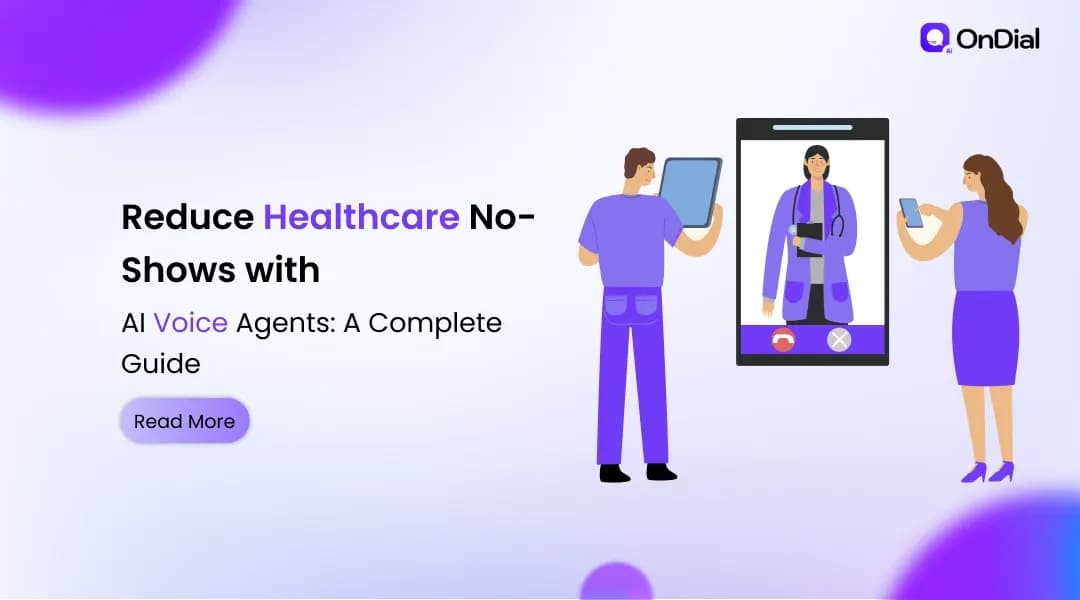
Every year, patient no-shows drain the global healthcare system of billions in revenue, disrupt clinical schedules, and delay care for patients who genuinely need it. In the United States alone, missed appointments cost the healthcare industry an estimated $150 billion annually, with individual practices losing between $150 and $250 per unfilled slot. For a mid-sized clinic seeing 30 patients a day, even a 15% no-show rate translates to roughly four or five empty slots daily, adding up to more than $200,000 in lost revenue over the course of a year.
The problem is not just financial. When a patient fails to show up, the ripple effects cascade through the entire operation. Physicians sit idle during time that could have been used to treat other patients on the waitlist. Staff members who prepared charts, rooms, and resources for the appointment absorb that effort as pure waste. Other patients who needed that slot remain stuck on extended waitlists, sometimes waiting weeks for an opening that could have been theirs. In specialties like cardiology, oncology, and orthopedics, where timely treatment can significantly influence patient outcomes, a missed appointment is not just an inconvenience. It is a clinical risk.
In India and other multilingual markets, the no-show problem is amplified by communication barriers that traditional reminder systems struggle to overcome. A clinic network operating across Gujarat, Maharashtra, and Tamil Nadu cannot rely on a single language for patient communication. SMS reminders sent in English may go unread by patients who are more comfortable in Gujarati, Marathi, or Tamil. Automated robocalls with rigid, pre-recorded scripts feel impersonal and are easily ignored. Meanwhile, front desk staff who are already managing walk-ins, insurance queries, and administrative work simply do not have the bandwidth to make dozens of personal reminder calls every morning.
This is where AI voice agents for healthcare are changing the equation entirely. Unlike static SMS blasts or inflexible IVR menus, modern AI voice agents can make and receive calls that sound like natural human conversations, in the patient's own language, at scale, around the clock. They can confirm appointments, offer rescheduling options, answer common pre-visit questions, and update the clinic's scheduling system in real time. Platforms like OnDial deploy these voice agents with sub-500 millisecond response latency, making the interaction feel immediate and human rather than robotic and frustrating. This guide covers the full picture: why no-shows happen, why traditional solutions fail, how AI voice agents solve the problem at its root, and what healthcare providers should expect when implementing one.
Why Patients Miss Appointments and Why Traditional Reminders Fail
Understanding why patients no-show is the first step toward solving the problem. Research consistently identifies several recurring patterns, and most of them have nothing to do with patients being irresponsible or indifferent about their health. The reality is more nuanced, and the solutions that actually work must address these root causes directly.
The Most Common Reasons Patients No-Show
Forgetfulness is the most frequently cited reason, accounting for roughly 30% to 40% of all missed appointments across studies. Patients book an appointment days or weeks in advance and, without a timely and effective reminder, simply forget about it as their daily life takes over. This is especially common in primary care and dental practices where appointments are often routine rather than urgent.
Scheduling conflicts rank as the second most common factor. Patients' work schedules change, childcare arrangements fall through, or unexpected obligations arise after the appointment was booked. In many of these cases, the patient fully intended to come but had no easy way to reschedule without calling the clinic during business hours, waiting on hold, and navigating a complicated process. When rescheduling feels like a chore, many patients default to simply not showing up.
Transportation and access issues disproportionately affect patients in rural areas, elderly patients, and those in lower income brackets. Financial concerns also play a role, particularly for patients who are uninsured or underinsured and worry about costs they may not be able to afford. In some cases, patients experience anxiety or fear about their diagnosis or procedure and avoid the appointment as a coping mechanism, a phenomenon well documented in specialties like oncology and mental health.
Why SMS and Email Reminders Fall Short
Most healthcare practices have adopted some form of automated reminder, typically an SMS or email sent 24 to 48 hours before the appointment. While these systems are better than nothing, they suffer from fundamental limitations that cap their effectiveness. Studies show that SMS reminders reduce no-show rates by approximately 5% to 10%, a meaningful but insufficient improvement for practices dealing with no-show rates of 20% or higher.
The core problem with text and email reminders is that they are one-directional. They inform the patient about the appointment but offer no easy mechanism for the patient to respond, ask a question, or reschedule on the spot. A patient who receives an SMS saying "Your appointment is tomorrow at 10 AM" and realizes they have a conflict must now call the clinic, wait on hold, and speak to a receptionist to change the time. Many patients simply will not do this, especially outside of business hours when the front desk is closed.
In multilingual markets like India, the limitation deepens. An SMS reminder sent in English to a patient in a tier two city who primarily communicates in Hindi or a regional language is far less effective than one delivered in their native tongue. Written reminders also fail to reach patients with limited literacy or those who do not regularly check their text messages, a significant demographic in many parts of the world.
Why Manual Reminder Calls Do Not Scale
The most effective traditional approach to reducing no-shows is a personal phone call from clinic staff. A well-timed call from a familiar voice, delivered in the patient's language, with the ability to answer questions and reschedule in real time, consistently outperforms every other reminder method. The problem is that manual calling is prohibitively expensive and impossible to scale.
A single receptionist can make approximately 15 to 20 effective reminder calls per hour when accounting for dialing, wait times, voicemails, and the actual conversation. For a clinic with 80 appointments the next day, that represents four or more hours of dedicated phone time, hours that the receptionist needs for checking patients in, handling insurance, answering incoming calls, and managing the front desk. Most practices simply cannot justify dedicating that level of staff time to reminder calls, so they either make calls inconsistently or abandon the practice entirely.
How AI Voice Agents Solve the No-Show Problem
AI voice agents combine the effectiveness of a personal phone call with the scalability and consistency of automation. They represent a fundamentally different approach from both static reminders and traditional robocalls, and understanding how they work is essential for evaluating whether they are the right fit for a healthcare practice.
An AI voice agent is a software system that can initiate and handle phone calls autonomously, using natural language processing to understand what the patient says, conversational AI to generate appropriate responses, and text-to-speech technology to deliver those responses in a natural sounding voice. The best platforms, including OnDial, process this entire loop in under 500 milliseconds, which means the patient experiences no awkward pauses or delays that would signal they are speaking with a machine.
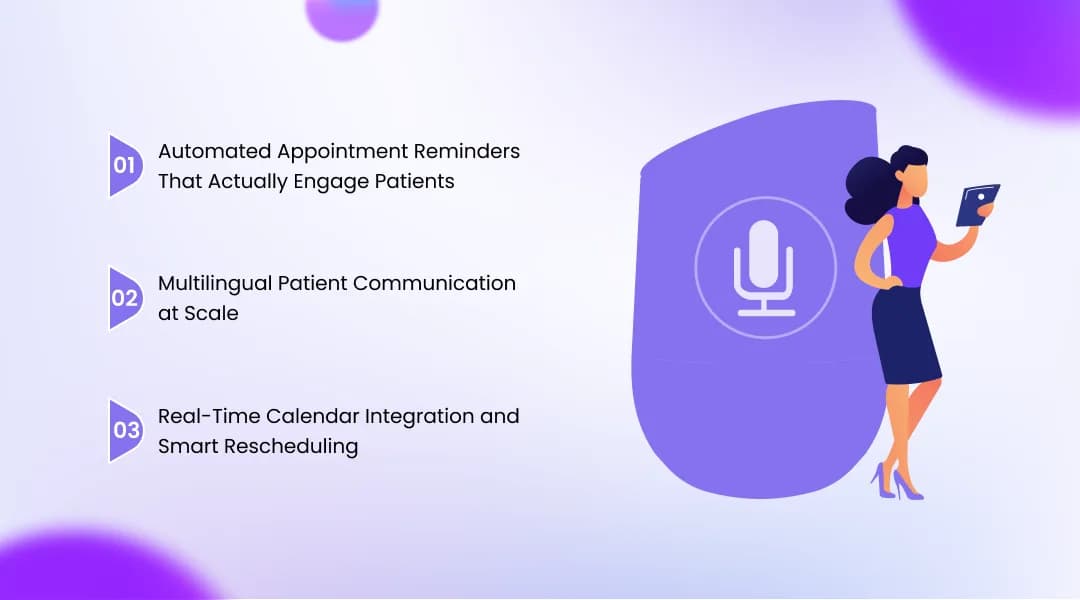
Automated Appointment Reminders That Actually Engage Patients
When deployed for appointment reminders, an AI voice agent does not simply read a scripted message and hang up. It calls the patient at the optimal time, typically 24 to 48 hours before the appointment, greets them by name, confirms the appointment details, and then asks whether they plan to attend. If the patient confirms, the agent thanks them and ends the call. If the patient needs to reschedule, the agent accesses the clinic's calendar system in real time, offers available alternative slots, and books the new appointment on the spot. If the patient has questions about preparation instructions, parking, or what to bring, the agent can answer those as well.
This interactive capability is what separates AI voice agents from every other reminder method. The patient never needs to call back, wait on hold, or navigate a phone menu. The entire interaction, from reminder to confirmation or rescheduling, happens in a single two-minute call. Healthcare providers using AI voice agents for automated appointment reminders healthcare report no-show rate reductions of 25% to 40%, significantly exceeding what SMS or email reminders can achieve alone.
Multilingual Patient Communication at Scale
For healthcare providers serving diverse patient populations, language capability is not optional. A voice agent that only communicates in English immediately excludes a significant portion of the patient base in multilingual markets. OnDial addresses this directly with support for over 100 languages, including 9 Indian languages with more than 80 Indian voice variations. This means a hospital network in India can deploy a single AI patient scheduling system that speaks Tamil to patients in Chennai, Gujarati to patients in Ahmedabad, Bengali to patients in Kolkata, and Hindi to patients across the northern states, all without hiring multilingual staff or maintaining separate call center teams for each region.
The voice variations matter as much as the language itself. Patients respond more positively to voices that match the accent and cadence they are familiar with. A patient in rural Maharashtra is far more likely to engage with a call that sounds like someone from their region than a generic, accent-neutral voice that feels foreign and impersonal. This level of linguistic personalization was previously only possible with locally hired human agents, but AI voice technology has made it scalable and affordable for practices of any size.
Real-Time Calendar Integration and Smart Rescheduling
The ability to reschedule during the reminder call is arguably the most impactful feature for reducing no-shows. Studies consistently show that a large percentage of no-shows are not patients who refuse to come; they are patients who cannot make the scheduled time but found it too inconvenient to reschedule through traditional channels. By removing that friction entirely, AI voice agents convert what would have been a no-show into a rescheduled visit.
This requires deep integration between the voice agent and the practice's scheduling system. When OnDial's AI agent offers a patient a new time slot, it is pulling live availability from the clinic's calendar, checking provider schedules, and factoring in appointment type and duration. Once the patient selects a new time, the booking is confirmed instantly, the calendar is updated, and a confirmation message is sent. There is no manual step required from clinic staff, and the slot that would have been empty is either filled by the rescheduled patient or freed up for a waitlisted patient to claim.
Quantifying the Impact: Revenue Recovery and Operational Gains
Healthcare providers evaluating AI voice agents need to understand the financial and operational impact in concrete terms. The numbers are compelling, and they apply across practice sizes and specialties.
Direct Revenue Recovery
Consider a specialty practice generating an average of $300 per appointment with a current no-show rate of 18%. For a practice seeing 40 patients per day across its providers, that 18% rate means roughly 7 missed appointments daily, equating to $2,100 in daily lost revenue or approximately $546,000 per year. If an AI voice agent reduces the no-show rate from 18% to 11%, a conservative 40% relative reduction, the practice recovers approximately 3 appointments per day. At $300 per visit, that translates to $900 per day or roughly $234,000 in recovered annual revenue.
For larger hospital networks or multi-location clinic groups, the numbers scale proportionally. A network of 10 clinics with similar profiles would recover over $2 million annually. When compared to the cost of deploying an AI patient scheduling system, which typically runs at a fraction of the salary of even one additional front desk employee, the return on investment becomes difficult to ignore.
Staff Productivity and Burnout Reduction
The operational benefits extend well beyond revenue. When the AI voice agent handles appointment reminders and rescheduling, front desk staff are freed from hours of repetitive phone work every day. This time can be redirected to higher-value activities like patient intake, insurance verification, and in-person patient experience. In practices that have implemented healthcare call automation, staff consistently report lower stress levels and higher job satisfaction because they are no longer spending the first two hours of every morning making reminder calls to voicemails that may never be heard.
The reduction in phone volume also improves the experience for patients who call the clinic with genuine questions or urgent needs. When the front desk is not tied up making outbound reminder calls, inbound calls are answered faster, hold times drop, and patients feel like they are receiving better service. This is a compounding benefit that affects patient retention and practice reputation over the long term.
Waitlist Optimization and Slot Utilization
A less obvious but equally valuable benefit of AI voice agents is their ability to maximize schedule utilization through proactive waitlist management. When a patient cancels or reschedules during a reminder call, the AI agent can immediately begin calling patients on the waitlist to fill the newly opened slot. This process, which would take a human receptionist significant time and effort to execute manually, happens automatically and within minutes.
For specialties with long waitlists, such as dermatology, psychiatry, or certain surgical subspecialties, this capability is transformative. Slots that would have sat empty until the next morning when staff noticed the cancellation are filled within the hour. Over time, this pushes schedule utilization rates above 90%, a benchmark that most practices struggle to achieve with manual processes alone.
How AI Voice Agents Handle the Patient Interaction
Understanding the actual patient experience is critical for healthcare providers who worry about patient satisfaction and the perception of AI replacing human interaction. The reality of how modern AI voice agents work is far more sophisticated and patient-friendly than many providers expect.
The Anatomy of an AI Reminder Call
A typical AI-powered appointment reminder call follows a natural conversational flow. The agent calls the patient and introduces itself clearly, usually saying something like "Hello, this is calling from [clinic name] regarding your upcoming appointment." Transparency is important; the best implementations are upfront about the call being automated, which builds trust rather than undermining it.
The agent then confirms the appointment details: the date, time, provider name, and location. It asks the patient to confirm whether they plan to attend. From this point, the conversation branches naturally based on the patient's response. If the patient confirms, the agent may provide any pre-visit instructions, such as fasting requirements or documents to bring, and ends the call. If the patient wants to reschedule, the agent offers available times. If the patient wants to cancel, the agent records the cancellation and can ask a brief follow-up about the reason, giving the practice valuable data about why patients disengage.
Throughout this interaction, OnDial's voice agents respond with sub-500 millisecond latency, which means there are no unnatural pauses that break conversational flow. The patient experiences the call much as they would a conversation with a well-trained receptionist, albeit one who never has a bad day, never puts them on hold, and is available 24 hours a day, 7 days a week.
Handling Complex Patient Responses
One common concern among healthcare providers is whether AI voice agents can handle patients who do not respond with simple "yes" or "no" answers. Modern conversational AI is designed for exactly this complexity. When a patient says something like "I think I can make it but I am not sure yet, can someone call me back tomorrow?" the agent can understand the intent, log the response as tentative, and schedule a follow-up call for the next day. When a patient asks "What do I need to bring?" or "Do I need to fast before the blood test?" the agent can provide pre-programmed clinical responses that the practice has approved.
For questions that fall outside the agent's knowledge base, the system is designed to fail gracefully. Rather than providing inaccurate information, it acknowledges the question and offers to transfer the patient to a staff member or have someone call back. This safety-first approach is particularly important in healthcare, where incorrect information can have serious consequences. The combination of broad conversational capability with clear escalation paths for edge cases is what makes AI voice agents practical for clinical environments.
Implementing AI Voice Agents in Your Healthcare Practice
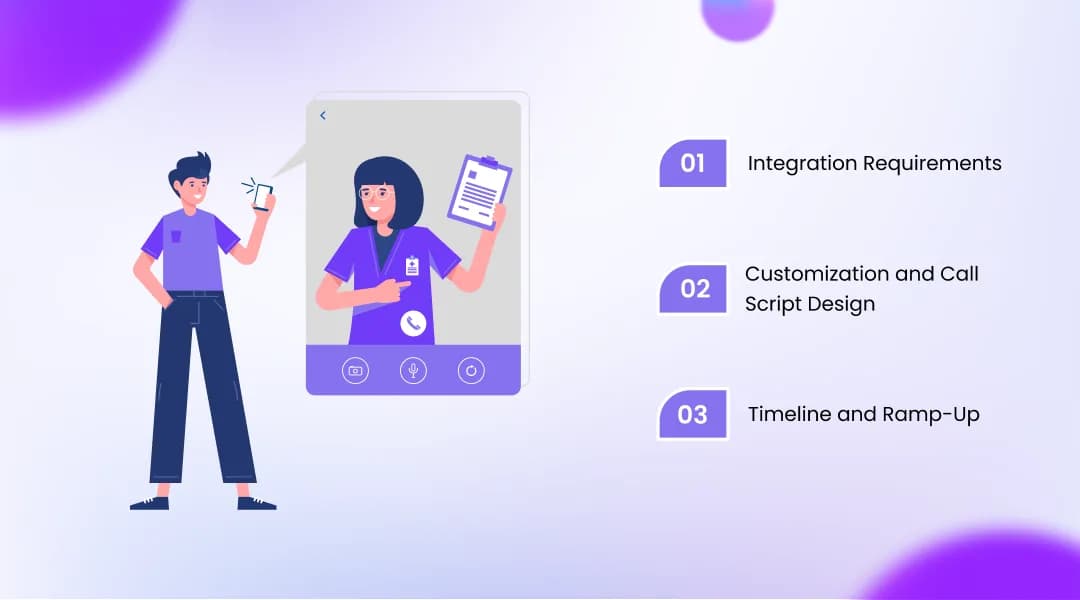
Moving from evaluation to implementation requires clarity about what the deployment process involves, what decisions need to be made upfront, and what timeline to expect. Healthcare providers who understand these elements upfront are better positioned for a smooth launch and faster results.
Integration Requirements
The most important technical requirement for a successful AI voice agent deployment is integration with the practice's existing scheduling and electronic health record (EHR) system. The voice agent needs read and write access to the appointment calendar to confirm existing bookings and create new ones during rescheduling calls. Most modern EHR and practice management systems offer API access that enables this integration, and platforms like OnDial support both API-based connections for practices with technical teams and no-code deployment options for practices that need a simpler setup path.
Beyond calendar integration, practices should consider phone system compatibility, call recording and storage policies, and data handling requirements. Healthcare data is subject to strict regulatory standards, including HIPAA in the United States and equivalent frameworks in other jurisdictions. OnDial's platform is built with GDPR and CCPA compliant data handling, which provides a strong compliance foundation, though individual practices should verify that any deployment meets their specific regulatory obligations.
Customization and Call Script Design
While AI voice agents use conversational AI rather than rigid scripts, they still require careful configuration to reflect the practice's brand, tone, and clinical protocols. During setup, the practice defines the agent's greeting, the information it confirms during reminder calls, the pre-visit instructions it provides for different appointment types, and the escalation rules for questions it cannot answer.
This customization process typically involves close collaboration between the practice's operations team and the AI platform provider. The most effective implementations involve testing the call flow with real appointment scenarios, refining the agent's responses based on common patient questions specific to the practice, and establishing clear guidelines for when the agent should transfer to a human staff member. Practices that invest time in this configuration phase see significantly better results than those who deploy with generic default settings.
Timeline and Ramp-Up
Healthcare providers can realistically expect to move from initial evaluation to live deployment within two to four weeks for a standard appointment reminder use case. The first week typically involves integration setup and call flow configuration. The second week involves testing with a small subset of appointments to validate the experience and identify any issues. By weeks three and four, the system is handling the full appointment volume with ongoing monitoring and optimization.
Results appear quickly. Most practices see a measurable reduction in no-show rates within the first two weeks of full deployment, with continued improvement over the first 60 to 90 days as the system's call timing, messaging, and rescheduling options are refined based on actual patient response data. OnDial's smart analytics and call sentiment tracking give practices visibility into how patients are responding, which messages are most effective, and where the call flow can be improved, enabling data-driven optimization that would be impossible with manual reminder processes.
Beyond Reminders: Other Healthcare Use Cases for AI Voice Agents
While appointment reminders are the highest-impact starting point, they represent just one application of healthcare call automation. Practices that begin with reminders often expand into additional use cases as they see the results and gain confidence in the technology.
Post-Visit Follow-Up and Care Coordination
AI voice agents can call patients after their visit to check on recovery, remind them about follow-up appointments, confirm medication adherence, and screen for complications using clinically approved questionnaires. These follow-up calls improve patient outcomes and satisfaction while generating data that clinicians can use to identify patients who may need additional attention. For chronic disease management programs, automated follow-up calls provide consistent patient engagement at a scale that would require a dedicated care coordination team if done manually.
Patient Intake and Pre-Appointment Data Collection
Before a patient arrives for their appointment, the AI agent can call to collect or verify insurance information, confirm the patient's current medications, screen for any changes in health status, and remind the patient to complete any required paperwork. This pre-visit data collection reduces the time patients spend filling out forms in the waiting room and allows clinical staff to prepare more effectively for the encounter.
Prescription Refill Reminders and Preventive Care Outreach
Pharmacies and primary care practices use AI voice agents to remind patients when prescriptions are due for refill, when preventive screenings are recommended based on their age and health profile, and when it is time for annual wellness visits. These outbound campaigns improve medication adherence, increase preventive care utilization, and generate additional appointment volume for the practice.
Conclusion
Patient no-shows are not an unavoidable cost of running a healthcare practice. They are a solvable problem, and AI voice agents represent the most effective solution available today. The three critical takeaways from this guide are straightforward: first, traditional reminders like SMS and email are better than nothing but cap out at modest improvement because they lack the interactive, conversational capability that actually changes patient behavior. Second, AI voice agents reduce no-show rates by 25% to 40% because they engage patients in real conversations where rescheduling is immediate and frictionless, addressing the root causes of no-shows rather than just the symptom of forgetfulness. Third, the financial return is concrete and measurable, with mid-sized practices routinely recovering six figures in annual revenue while simultaneously reducing staff workload and improving patient satisfaction.
OnDial delivers exactly this capability with the reliability, multilingual depth, and deployment flexibility that healthcare providers need. With sub-500 millisecond response latency that makes calls feel natural, support for over 100 languages including 9 Indian languages with 80 plus voice variations, 24/7 availability, real-time calendar integration, and both API and no-code deployment options, OnDial's AI voice agents are built for real healthcare operations at any scale. The platform's smart analytics and call sentiment tracking give practices continuous visibility into performance, enabling ongoing optimization that keeps no-show rates low and schedule utilization high.
If your practice is losing revenue and productivity to patient no-shows, the most effective next step is to see an AI voice agent in action with your own scheduling workflow. Schedule a demo with OnDial to explore how automated, multilingual, 24/7 appointment management can transform your practice operations and recover the revenue that no-shows are costing you today.