If you’ve run a business long enough, you already know the truth nobody likes to admit:
People don’t call because they love talking to you.
They call because they need something, and they expect an answer - now.
But here’s the problem.
Humans are human.
We get tired. We miss calls. We multitask badly. We can’t respond to five people at once, no matter how motivated, caffeinated, or guilt-driven we are.
And yet, customer expectations keep rising like a software update nobody asked for.
That pressure is exactly why AI customer service automation is taking over business communication, not because it’s trendy, but because the alternative is burnout, inefficiency, and lost revenue.
Why AI Is Taking Over Customer Communication
I used to be the person saying, “AI answering phone calls? That’ll feel robotic and cold.”
Then I watched a business go from losing 41% of inbound calls to missing zero - literally zero - after switching to an AI voice agent, including teams adopting AI voice agents for call centres.
Something shifted.
Not because AI became perfect.
But because customers realised something simple:
A fast, accurate response beats waiting on hold or being ignored.
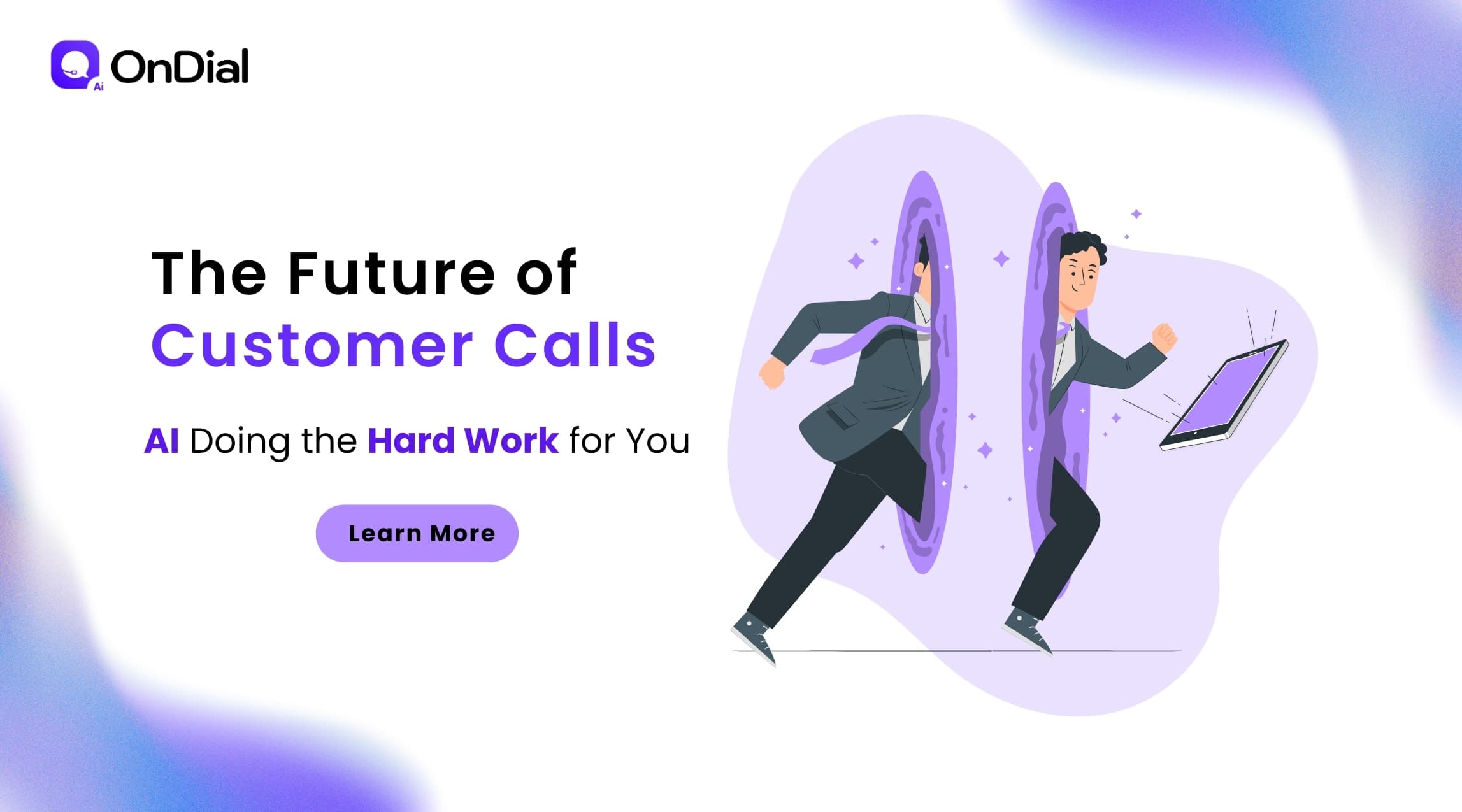
And that is the future of customer calls - responsiveness over everything.
Speed, Scale, Accuracy
Humans scale linearly.
More calls → more people → more cost → more complexity.
AI?
AI scales horizontally.
One system. Thousands of parallel conversations. All consistent. All documented. All measurable.
No training fatigue. No forgetting scripts. No “Sorry, can you repeat that?” unless it’s genuinely needed.
Cost Reduction & 24/7 Availability
Let's say a call center employee costs ₹35,000–₹90,000/month (or $500–$1500 internationally), depending on skill and region.
That person can handle a limited number of calls at once and they get tired, bored, sick, or emotionally drained.
An AI phone answering system?
Works 24/7
Never asks for time off
Handles rush-hour call spikes without panic
Costs a fraction of scaling human labour
And before someone says it:
No, this doesn't put humans out of work.
It repositions them.
(To meaningful, judgment-based work instead of repeating “Your appointment is confirmed” 87 times a day.). Learn more in Turn Missed Calls Into Sales With AI Voice Agent.
How AI Voice Agents Work Behind the Scenes
No magic. Just engineering, training data, and systems working together:
ASR (Automatic Speech Recognition): Converts speech to text.
NLP (Natural Language Processing): Understands meaning, intent, tone.
Context Memory: Remembers past responses in the call.
Integrations: Booking calendars, CRM systems, payment platforms.
NLG (Natural Language Generation): Responds conversationally in real time.
If you’ve ever wondered whether an AI can understand accents, interruptions, or emotional tone - the short answer is yes.
Not perfectly. But well enough to handle 70–90% of common queries.
CRM Integration & Contextual Understanding
A great AI voice agent doesn’t just respond.
It knows who it’s talking to.
Example:
“Hi Maria, I see you bought a skincare kit last month through Services. Are you calling about a refill or delivery status?”
That level of personalisation used to require well-trained staff.
Now? It’s software thinking faster than humans can process.
Top Advantages of AI Customer Call Automation
Let’s break it down without fluff.
Zero Missed Calls
If someone calls, they get a response. End of story.
Instant Responses
No hold music. No voicemail. No queue.
Lower Staffing Costs
Hire humans for judgment-heavy or emotionally complex work, not repetitive scripts.
Use Cases Where AI Handles Calls Better Than Humans
This part usually surprises business owners.
AI isn’t just “good enough.”
In many scenarios, it’s better.
Appointment booking
Order status
Returns & refunds
Service area checks
Basic troubleshooting
FAQ-style questions
Lead pre-qualification
Warranty queries
Delivery ETA requests
In short: repetitive, structured conversations.
What Businesses Get Wrong About AI Call Support
Here’s the uncomfortable truth:
Some businesses adopt AI incorrectly.
They treat it like a replacement instead of an extension of the team.
AI isn’t here to erase your people.
It’s here to filter, route, prepare, document, and act, so humans handle what humans should. Learn more in Best AI Voice Agents For Call Centres.
Human + AI: The Perfect Hybrid Customer Experience
The future isn’t AI or humans.
It’s:
AI handles the routine. Humans handle the meaningful.
Think of it like triage.
The AI does the sorting so your best people can do their best work.
Real Numbers: How AI Boosts Conversions & Revenue
Across deployments in the last 4 years, I’ve seen common patterns:
20–60% more sales calls handled
2–5x faster response time
35–70% reduction in support load
15–40% increase in appointment completion
Drastically improved CSAT scores
And the most overlooked benefit?
AI eliminates emotional fatigue.
Humans don't burn out from saying, “Hi, how can I help?” five thousand times a month.
Choosing the Right AI Call Automation Solution
This is where most businesses get overwhelmed - because yes, the market is noisy with OnDial.
My advice?
Look for:
Natural conversation flow
Accent handling
CRM & calendar integration
Real-time reasoning
Transparency (no mystery-tech companies)
Human handoff capability
Companies like OnDial understood early that AI voice systems aren't just tech, they're communication infrastructure.
That mindset matters.
Conclusion
AI isn’t the future of customer calls.
It’s the present - just unevenly adopted.
Businesses still debating whether they need AI call handling aren’t asking the right question.
The real question is:
“How many customers will we lose if we don’t use it?”
Because responsiveness isn’t optional anymore.
It’s the new baseline.
And AI finally makes it achievable, without drowning your team, burning your budget, or sacrificing humanity in the process.