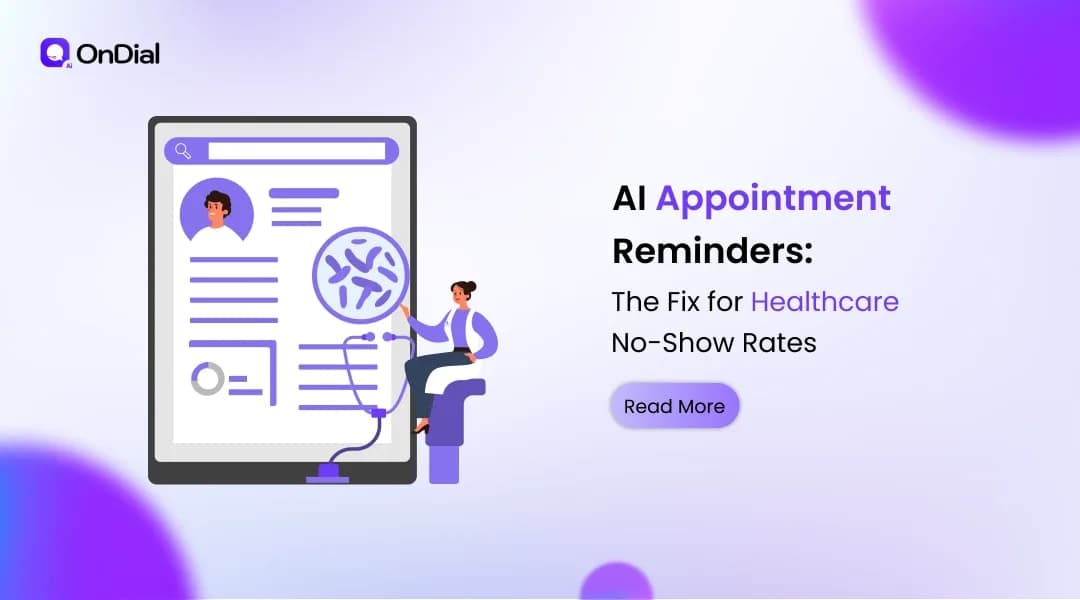
Patient no-shows drain $150 billion from the U.S. healthcare system every year. That number, reported consistently across MGMA data and multiple industry analyses, is not a rounding error or a projection. It is real money disappearing from clinics, hospitals, and independent practices every single day. If you manage a healthcare practice and you are watching 15% to 30% of your scheduled slots go empty, you already know the frustration. AI appointment reminders are the most effective tool available right now to reverse that trend, using voice calls, texts, and predictive analytics to keep patients connected to their care.
In this article, I will walk you through exactly how AI-powered reminder systems work, why voice AI specifically outperforms traditional methods, and what the peer-reviewed data says about results. You will also learn what to evaluate when choosing a solution for your practice.
The Real Cost of Healthcare No-Shows
Revenue Loss That Compounds Quietly
The math is blunt. A single missed appointment costs a practice between $150 and $300 in lost revenue. For a mid-sized primary care office seeing 20 patients a day with a 19% healthcare no-show rate, that translates to roughly $150,000 in annual revenue that simply vanishes. Not from low demand. Not from staffing problems. From patients who booked and did not show up.
Here is what makes this worse: the loss is invisible to most practices. Unlike a denied claim or a supply chain issue, no-shows do not trigger an alert. They sit quietly in scheduling reports, masked as "normal operations." I have seen practices treat a 20% no-show rate as the cost of doing business for years before realizing they were leaving six figures on the table annually.
(And that figure does not even account for the front-desk hours spent making manual reminder calls that patients ignore.)
The Patient Care Problem Nobody Talks About
No-shows are not just a revenue problem. They are a care continuity problem. A patient who misses a follow-up for diabetes management or hypertension monitoring is not just an empty chair. That patient is now at higher risk for emergency department visits, unmonitored medication changes, and preventable complications. According to research published by the National Library of Medicine, patients who miss even a single primary care appointment are 70% more likely to not return within 18 months.
Have you ever considered what happens to the patients who wanted that slot? Every no-show blocks access for someone else who needed care.
How AI Appointment Reminders Actually Work
Beyond One-Way Notifications
An AI appointment reminder is not a robocall. It is not a pre-recorded message that plays and hangs up. Modern AI reminder systems use natural language processing to hold actual conversations with patients.
Here is the typical flow: the system contacts the patient through their preferred channel - voice call, SMS, email, or WhatsApp - at clinically optimized intervals. The best implementations use a multi-touch cadence: seven days before, two days before, and the morning of the appointment. But the real difference is what happens when the patient responds.
Unlike a one-way text that says "Reply 1 to confirm," a conversational AI system can answer questions about the appointment, explain what to bring, check whether the patient has transportation, and reschedule on the spot if the original time no longer works. The rescheduling part is critical. In my experience working with healthcare organizations at OnDial, the majority of no-shows are not patients who decided they do not want care. They are patients who needed to reschedule but found the process too friction-heavy to bother.
Predictive Analytics and Risk Scoring
The smarter AI systems go beyond reminders entirely. They use predictive no-show analytics to identify which patients are most likely to miss an appointment before it happens. By analyzing patterns like appointment history, time of day, lead time between booking and visit, and demographic factors, these models can flag high-risk appointments and trigger additional outreach.
A 2025 MGMA Stat poll found that only 19% of medical group practices currently use chatbots or virtual assistants for patient communication. That adoption gap means practices that move early gain a real competitive edge in patient retention and revenue recovery.
Why Voice AI Outperforms SMS-Only Reminders
The Conversation Gap in Traditional Reminders
Text reminders work. The research is clear that SMS alone can reduce no-shows by approximately 14%. But here is what SMS cannot do: it cannot hear that a patient is confused about their appointment location. It cannot detect that someone needs a translator. It cannot have a two-minute conversation that resolves a scheduling conflict in real time.
AI voice reminders for patients fill that gap. A voice AI agent calls the patient, speaks naturally, confirms the appointment details, and handles objections or barriers on the spot. Classic interactive voice response (IVR) systems with "press 1 to confirm" achieve response rates below 25%. A natural-sounding voice agent that listens and responds achieves dramatically higher engagement because it meets patients where they are: on the phone, in a conversation, feeling heard.
This is where OnDial's focus on voice AI technology becomes particularly relevant. We have built our platform around the belief that voice is the most natural communication channel for healthcare. Not everyone checks texts promptly. Not everyone uses patient portals. But nearly everyone picks up a phone call from their doctor's office.
After-Hours Access Changes Everything
Here is a stat that should make every practice manager pause: approximately 40% of patient calls happen after business hours. That means nearly half of the opportunities to confirm, reschedule, or resolve barriers are happening when nobody is at the front desk.
An automated patient outreach system powered by voice AI handles those calls around the clock. No hold times. No voicemail. A patient who needs to move their Thursday appointment to Friday at 9 PM on a Tuesday can do so in under two minutes, and the system fills the opened slot from the waitlist automatically.
One thing worth being honest about: AI voice agents are not perfect. They handle routine scheduling conversations extremely well, but complex clinical questions or emotionally sensitive situations still require a human handoff. The best systems recognize this and transfer seamlessly when the conversation exceeds what the AI should handle.
Real Results: What the Data Shows
Peer-Reviewed Evidence
The strongest evidence comes from a peer-reviewed study analyzing 135,393 appointments in the UAE Primary Health Care Network, published in the Journal of Medical Internet Research. After deploying AI-driven reminder calls, the no-show rate dropped from 20.82% to 10.25%, a 50.7% relative reduction. Patients were 57% less likely to miss appointments after AI deployment.
That is not a vendor case study. That is a controlled analysis across a large healthcare network, published in a peer-reviewed journal.
Other documented results reinforce this pattern. Northwell Health reported a 25% increase in kept appointments alongside a 30% drop in call center volume after implementing voice-enabled scheduling. UPMC attributed an additional $2.6 million in annual revenue to their automated reminder system. These numbers are consistent with what we see across implementations at OnDial: when you make it easy for patients to confirm or reschedule through a natural conversation, they do.
Operational Wins Beyond Revenue
Reducing missed appointments is the headline metric, but the downstream effects matter just as much. Practices report freeing the equivalent of one full-time front-desk administrator by eliminating manual reminder calls. Staff burnout decreases. Patient satisfaction scores improve because communication feels consistent and professional rather than sporadic and rushed.
The Medical Group Management Association (MGMA) recommends limiting patient outreach to no more than three contacts per appointment to avoid reminder fatigue. AI systems are particularly good at respecting this cadence because they follow rules consistently, something manual processes frequently fail to do.
What to Look for in an AI Reminder Solution
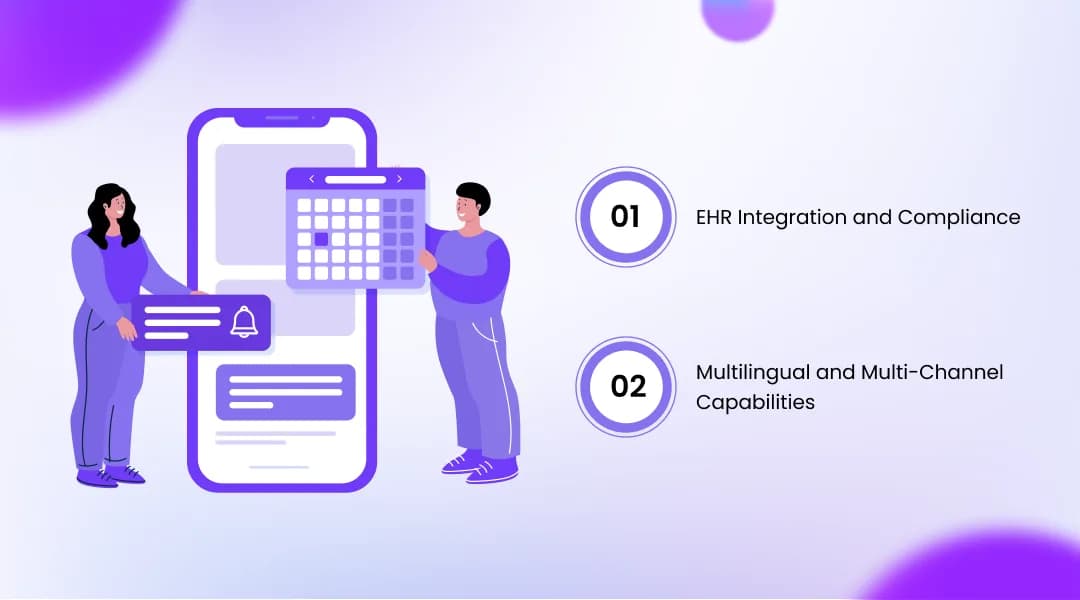
EHR Integration and Compliance
Any AI reminder system you evaluate must integrate directly with your electronic health record system. If the AI cannot read your appointment calendar and write confirmed or rescheduled appointments back into it, you are creating more manual work, not less. Look for platforms that support HL7, FHIR, or direct API connections to your practice management system.
HIPAA compliance is non-negotiable. The good news is that HIPAA explicitly allows appointment reminders without special patient authorization, as they fall under treatment communications. However, the platform must encrypt all patient data, provide a Business Associate Agreement (BAA), and maintain audit logs of every interaction. Always verify a vendor's SOC 2 certification and their data retention policies before signing.
Multilingual and Multi-Channel Capabilities
If your practice serves a diverse patient population, your reminder system needs to communicate in the languages your patients speak. Modern voice AI platforms can operate fluently in dozens of languages, which is not a luxury feature. It is an equity requirement. Patients with limited English proficiency are disproportionately affected by no-shows, often because they did not fully understand the appointment details communicated in English.
Multi-channel delivery matters too. The ideal system lets patients choose their preferred contact method and adjusts automatically based on response patterns. Some patients respond better to voice calls. Others prefer text. The AI learns these preferences over time and adjusts outreach accordingly, without requiring staff to manually track and manage each patient's preferences.
Conclusion
AI appointment reminders are not experimental technology. They are a proven, measurable solution to one of healthcare's most persistent operational problems. The evidence is clear: practices that adopt AI-powered voice reminders reduce no-shows by 30% to 50%, recover significant revenue, and free their staff to focus on patient care instead of phone work. The three things to remember are that multi-channel, conversational reminders outperform one-way messages; predictive analytics let you intervene before a no-show happens; and voice AI specifically closes the engagement gap that SMS leaves open.
If you are ready to stop losing revenue to empty appointment slots, OnDial builds AI voice solutions specifically designed for healthcare communication challenges.
AI appointment reminders use voice calls, texts, and predictive analytics to reduce healthcare no-show rates by up to 50%, recovering lost revenue and keeping patients connected to their care.