Let me guess.
Your team is missing calls. Or worse, answering them, but too late to matter.
I’ve worked with companies that spent years hiring, training, scaling support… only to realize the bottleneck wasn’t people.
It was response time.
That’s usually the moment AI voice agents enter the conversation. Not as a shiny tool. But as a necessity.
And yet, most businesses hesitate.
Because this feels complicated. Risky. Expensive.
It doesn’t have to be.
I’m going to walk you through exactly how I’ve helped companies implement AI voice agents step by step, without burning budget or trust.
No fluff. No theory. Just what actually works.
Key Benefits of AI Voice Agents for Businesses
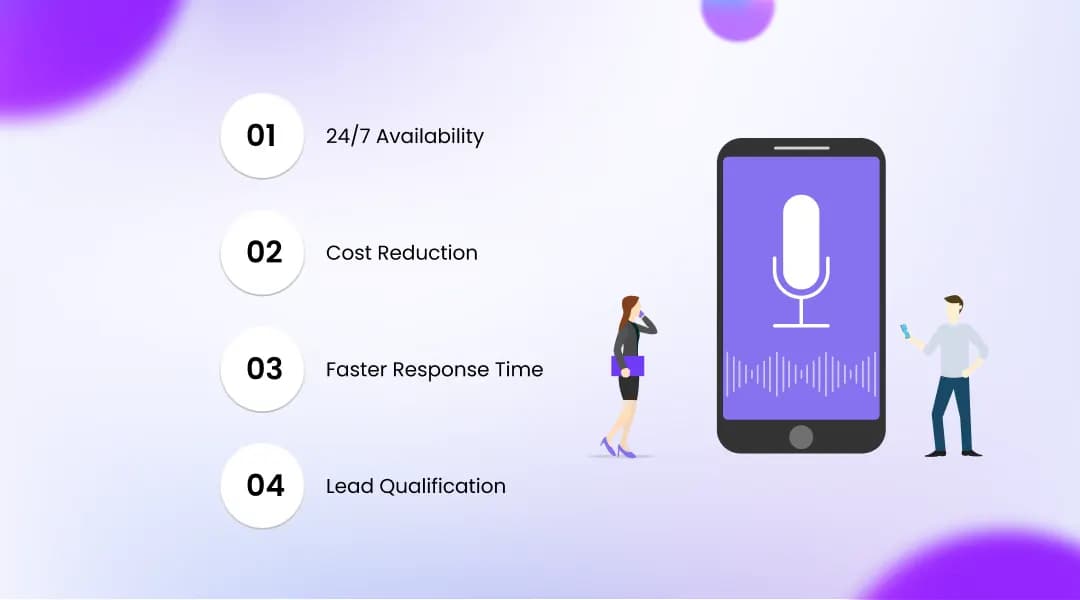
24/7 Availability
Humans need sleep. Systems don’t.
An AI call answering system ensures every call gets answered. Even at 3:17 AM. Especially at 3:17 AM, when competitors are silent.
Cost Reduction
Here’s a hard truth.
Scaling support teams is expensive. Salaries. Training. Attrition.
AI voice automation doesn’t eliminate humans, but it dramatically reduces dependency on repetitive work.
Faster Response Time
Speed wins.
In sales. In support. Everywhere.
AI call agents respond instantly. No hold music. No queues. Just answers.
Lead Qualification
This one is underrated.
A good AI voice assistant for sales calls doesn’t just talk—it filters.
It identifies intent. Prioritizes high-value leads. Routes intelligently.
That’s not automation. That’s acceleration.
Step-by-Step Guide to Implement AI Voice Agents
Step 1: Identify Your Business Use Case
Start here. Always.
If you skip this step, everything breaks later.
Ask yourself: Why do I actually need this?
Customer Support
Handling FAQs. Order tracking. Complaint logging.
Sales Calls
Lead qualification. Follow-ups. Initial outreach.
Appointment Booking
Healthcare, real estate, services, this is low-hanging fruit.
(Quick reality check: if you’re trying to do everything at once… you’re setting yourself up to fail.)
Pick one use case. Nail it.
Step 2: Choose the Right AI Voice Platform
Not all platforms are equal. Not even close.
Features to Look For
Real-time AI call handling
Natural language understanding
Multi-language support
Call analytics
Integration Capabilities
If it doesn’t integrate with your CRM, it’s a liability.
You want strong voice AI integration with CRM systems. Otherwise, data lives in silos and silos kill efficiency.
Step 3: Design Conversation Flows
This is where most implementations go wrong.
Bad conversations = bad experience.
Scripts vs Dynamic AI Responses
Scripts are predictable. Safe.
Dynamic AI is flexible. Powerful.
The best systems combine both.
Personalization
Use customer data.
Names. History. Preferences.
Because nobody enjoys talking to a robotic voice assistant that sounds like it learned empathy from a manual.
Step 4: Integrate with Your Existing Systems
Now we connect the dots.
CRM Integration
Your AI phone agent for small business should log every interaction automatically.
Calls → CRM → Insights → Action.
API Connections
Payments. Booking systems. Internal tools.
If your AI can’t trigger actions, it’s just… talking.
And talking isn’t enough.
Step 5: Train the AI Model
Here’s where things get interesting.
AI doesn’t magically “know” your business.
You teach it.
Data Input
Past call recordings
FAQs
Customer queries
Continuous Learning
The best conversational AI voice workflow improves over time.
But only if you feed it data. Regularly.
Step 6: Test Before Deployment
Please don’t skip this.
I’ve seen companies go live too early. It’s painful.
Call Simulations
Run real-world scenarios.
Angry customers. Confused users. Edge cases.
Error Handling
What happens when AI doesn’t understand?
If your answer is “it fails”… you have a problem.
Step 7: Deploy & Monitor Performance
Going live isn’t the finish line.
It’s the starting line.
KPIs Tracking
Call resolution rate
Response time
Conversion rate
Optimization
You tweak. Adjust. Improve.
Always.
Because even the best AI voice automation tools need refinement.
Common Challenges & How to Overcome Them
Poor Voice Experience
If it sounds robotic, people disengage.
Solution: Invest in natural voice models and better conversation design.
Integration Issues
This one’s technical. And frustrating.
Solution: Choose platforms with proven API capabilities.
Customer Trust
Some users don’t like AI.
Fair.
So don’t hide it. Be transparent. Offer human fallback.
Trust builds when expectations are clear.
Best Practices for AI Voice Agent Success
Keep Conversations Natural
Short sentences. Human tone.
No one wants to feel like they’re trapped in a script.
Use Human Fallback
Always give users an escape hatch.
Always.
Regular Updates
Your business evolves. Your AI should too.
Static systems decay. Fast.
Real Use Cases Across Industries
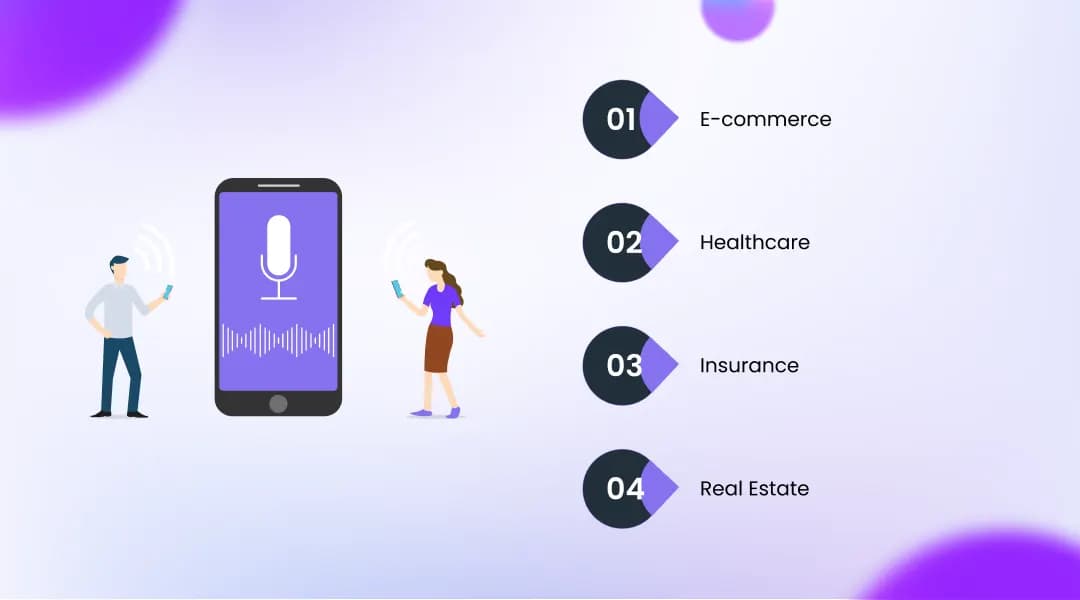
E-commerce
Order tracking. Returns. Upselling.
Automate customer calls using AI and watch support load drop.
Healthcare
Appointment booking. Patient reminders.
Accuracy matters here. So does empathy.
Insurance
Claim status updates. Policy queries.
High volume. Perfect fit for AI.
Real Estate
Lead qualification. Site visit scheduling.
Speed here directly impacts revenue.
Cost of Implementing AI Voice Agents
Let’s talk numbers.
Because this is where most decisions get stuck.
Setup Cost
Small businesses: $2,000 – $10,000
Mid-size: $10,000 – $50,000
Enterprise: Higher, depending on complexity
ROI Expectations
This is the part people underestimate.
Reduced staffing cost. Faster conversions. Better customer experience.
Most businesses recover costs within months—not years.
Future of AI Voice Technology in Business
Here’s what I’m seeing right now.
Voice AI is getting… human.
Not perfect. But close enough to blur lines.
Trends
Real-time emotion detection
Multilingual fluency
Deeper CRM intelligence
What to Expect
AI won’t replace humans.
It will replace waiting time.
And honestly, that’s what customers hate the most.
Conclusion
If you’ve made it this far, you’re not just curious.
You’re serious.
And that’s good. Because implementing AI voice agents isn’t about following a trend.
It’s about fixing a problem.
Missed calls. Slow responses. Inefficient systems.
Start small. Stay focused. Improve constantly.
That’s how this works.
And if you do it right?
You won’t just keep up.
You’ll quietly outpace everyone still “thinking about it.”