Up to 40% of hotel calls go unanswered - resulting in direct revenue walking out the door before a single conversation even begins. (Canary Technologies, industry research.) Think about that number for a moment. Nearly half of every potential guest who picks up the phone to book a room never gets through to a human being. They hang up, open a browser, and book somewhere else.
Restaurants face an almost identical problem. A survey from Popmenu found that 83% of customers will order from a different restaurant if they call and reach voicemail more than once. Those aren't edge cases. Those are Friday nights. Peak season. The window when revenue is made or lost.
I've seen this pattern repeat across hospitality businesses of every size. The front desk is physically busiest at exactly the moment call volume peaks. Staff are managing check-ins, answering in-person questions, and coordinating with housekeeping - all while the phone rings off the hook. Something gets ignored. Almost always, it's the phone.
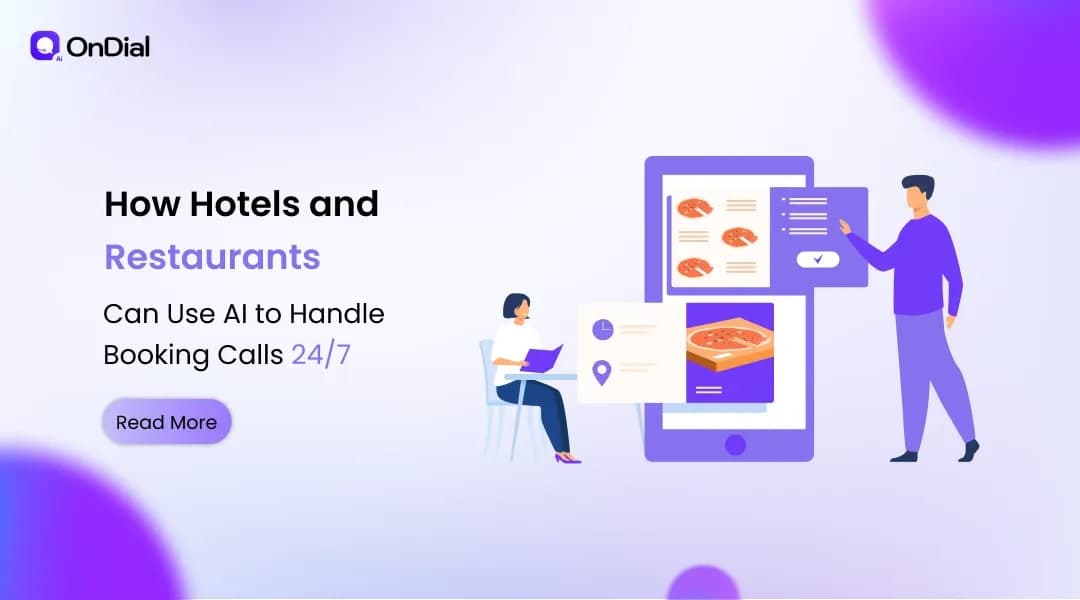
AI booking calls for hotels and restaurants solve this problem directly: an AI voice assistant answers every call, on the first ring, at any hour, in multiple languages - and handles the reservation end-to-end without pulling a human staff member away from a guest standing right in front of them.
In this guide, you'll learn exactly how this technology works, what it connects to, what results properties are actually seeing, and how to get started without disrupting your current operations.
What Is an AI Voice Assistant for Hospitality?
An AI voice assistant for hospitality is a software system that answers inbound phone calls, interprets a caller's intent using Natural Language Processing (NLP), and takes real-time action - such as checking availability, confirming reservations, or routing complex requests to a human - without any manual staff involvement.
This is not a phone tree. It is not a hold system with recorded prompts. It is a conversational system that listens, understands, responds naturally, and connects directly to your operational back-end.
What It Actually Does on a Call
When a guest calls, the AI answers immediately with a branded greeting. It detects language and conversational intent - distinguishing between "I'd like to book a table for Saturday" and "I need to cancel my reservation from last week." It then pulls live availability from your booking system, confirms the details with the caller, and writes the confirmed booking directly back into your system of record.
The entire exchange typically takes under two minutes. No hold music. No transfers. No voicemail.
Modern systems like those built on PolyAI, Slang AI, and conversational AI platforms such as the ones we work with at OnDial can handle unlimited simultaneous calls. If fifty guests call at 7 PM on a Saturday, all fifty are answered instantly.
How It Knows What to Say
This is where the technology gets genuinely interesting - and where generic chatbots fall short. A well-configured AI voice assistant is trained on your property's specific data: room types, pricing tiers, restaurant menus, special request protocols, cancellation policies, and the particular tone of your brand. It does not guess. It draws from a structured knowledge base that your team manages, and it gets more accurate with every interaction as the system learns from real conversations.
At OnDial, I've worked on implementations where the AI was trained on thousands of call transcripts from a property's actual guest interactions. The difference in conversation quality is immediate. Guests often don't realize they're speaking with an AI.
How AI Voice Assistants Handle Hotel Booking Calls
Hotel booking calls are some of the highest-value interactions your front desk handles. A guest calling to book a room is, by definition, a conversion opportunity. Losing that call - to a busy signal, a voicemail, or a 10-minute hold - is not just a missed conversation. It is a direct revenue loss, often replaced by an OTA booking that costs the hotel 15-25% in commission.
After-Hours Reservations and Real-Time PMS Sync
Here is the scenario that plays out in hotels every night: it is 11 PM, the front desk is unstaffed or running a skeleton crew, and a guest in a different time zone calls to book a room for next weekend. Under the old model, that call goes unanswered or to voicemail.
With AI booking calls in place, the assistant picks up immediately, queries your Property Management System (PMS) in real time - platforms like Opera, Mews, Cloudbeds, and Protel are all common integration targets - confirms availability, and writes the booking directly back into the system without any manual entry required. The guest receives a confirmation via SMS or email. Your occupancy rate just improved. While you were asleep.
This matters especially for independent hotels and boutique properties that cannot afford 24-hour human staffing. The AI fills the gap without the overhead.
Upselling, Modifications, and Multilingual Guests
A well-deployed AI voice assistant does not just answer calls - it actively contributes to revenue. During a booking conversation, it can offer relevant upgrades naturally ("We do have a sea-view suite available for just a small additional cost - would that interest you?") and handle special requests like adjoining rooms, early check-in, or accessibility needs.
It also handles modification and cancellation calls - the high-volume, low-complexity interactions that consume significant front desk time without generating direct revenue. Removing those from the human workload frees your team for the conversations that genuinely require a personal touch.
Multilingual capability is not a bonus feature in today's market. It is a baseline requirement. Modern AI voice systems support 35+ languages with high accuracy for accented speech, making them particularly valuable for properties serving international travelers. Hotels like Orchard Hotel Singapore and Millennium Hotels have reported a 43% reduction in front desk call volume after deploying multilingual AI voice systems, according to Aiello's published case data.
Automating Restaurant Reservations Around the Clock
Restaurants face a different but equally costly version of the same problem. The phone rings most heavily during two windows: the hour before service begins (when staff are in full prep mode) and after hours (when no one is there at all). Both windows are exactly when you most need calls answered and least have the capacity to answer them.
Should I actually use AI for my restaurant's phone bookings? If you are currently missing calls during service peaks or sending guests to voicemail after hours, then yes - the financial case is straightforward and the technology is ready.
Handling Peak-Hour Call Surges
Sixty-three percent of restaurants struggle to answer calls during busy periods (OpenTable research). That is not a staffing failure. That is a structural problem: the same window when reservations are most likely to be requested is the same window when every available person is already doing three other things.
AI booking calls for restaurants solve this structurally, not by adding headcount. The voice assistant handles the full reservation conversation - party size, date and time, dietary preferences, special occasion notes - while your team focuses on the guests already seated in front of them. Slang AI, for example, reports that restaurants using their platform see 50% more phone reservations and consistently maintain 96% guest satisfaction scores.
(Here's a pattern I find myself repeating to every hospitality client I work with: the technology does not replace hospitality - it protects the space where hospitality actually happens.)
Connecting to OpenTable, SevenRooms, and Your POS
The integration question is the one I hear most from restaurant operators: "Will it actually connect to our systems?" The answer, for most modern platforms, is yes - and the connections are increasingly pre-built.
AI voice assistants designed for restaurants integrate natively with reservation platforms including OpenTable, SevenRooms, Tripleseat, and Yelp Guest Manager. When the AI confirms a table booking, it writes directly into your reservation system of record. Availability is checked in real time. No double-bookings. No manual re-entry. The POS integration extends this to takeout orders: the AI can take a full phone order, confirm the total, and push the ticket directly to your kitchen display system or printer.
This is not theoretical. Platforms like Loman AI and Maple are doing exactly this for restaurant groups today, handling everything from single-unit independents to enterprise multi-location brands.
What Makes Conversational AI Different from a Basic Chatbot
This is a distinction that matters practically, not just technically. Many hospitality operators I've spoken with have been burned by early chatbot implementations - clunky keyword-matching systems that frustrated guests and created more work for staff than they saved. Modern conversational AI is a fundamentally different category.
An AI voice assistant for hospitality is not a rule-based chatbot. It uses Natural Language Processing to understand what a guest means, not just what keywords they use.
Intent Recognition vs. Keyword Matching
A keyword-based system hears "cancel my booking from last Tuesday" and searches for the word "cancel." A conversational AI system understands the full intent: the guest wants to cancel a specific reservation, the date reference is relative, and it needs to locate that booking in the system before any action is taken.
This distinction becomes critical when guests speak naturally - as they always do on the phone. "Can I push my reservation back an hour?" "Is there any chance you have something for a party of nine this Saturday?" "We've got a wheat allergy in our group - is that something you can accommodate?" All of these require contextual understanding, not keyword lookup. Modern NLP engines handle them cleanly.
The Human Handoff: When AI Steps Back
Here is what good AI voice systems are designed to do when they reach their limits: hand off gracefully. A well-configured system recognizes when a conversation involves a complaint, an emotionally sensitive situation, or a genuinely complex request that benefits from human judgment. It transfers the call to a staff member with a full context summary, so the guest does not have to repeat themselves.
This is the design principle OnDial builds into every voice AI implementation: the AI is not there to replace human hospitality. It is there to protect your team's capacity to deliver it. The goal is always an AI that handles what is routine so humans can focus on what is meaningful.
How AI Booking Systems Connect to Your Existing Tech Stack
The integration question is the one that gives hospitality operators the most pause - and rightly so. A voice AI system that does not connect to your real operations is just an expensive message-taking service. Proper integration is what separates genuinely useful AI from a technology that creates new problems.
PMS Integration and Real-Time Availability
The Property Management System is the operational brain of a hotel. For an AI voice assistant to genuinely handle bookings - not just collect information for staff to process manually - it must connect directly to the PMS with two-way API integration.
This means the AI queries live room availability before confirming any booking. It checks current rates, room type availability, and any existing reservations for the requested dates. When a booking is confirmed, it writes directly into the PMS, updating occupancy in real time. This prevents the double-booking risk that operators reasonably worry about when considering automation.
Common PMS platforms with established voice AI integration pathways include Oracle Opera Cloud, Mews, Cloudbeds, and Clock PMS. Before selecting any AI voice platform, confirming native integration with your specific PMS is the most important technical due diligence step you can take.
Data Security and Guest Privacy
Guest data is sensitive data. Payment details, contact information, stay preferences, dietary requirements - all of it flows through a booking conversation. Any AI system deployed in hospitality must meet appropriate data security standards.
Reputable platforms use encrypted data transmission, do not store raw payment information in conversation logs, and offer configurable data retention policies. For properties operating in regulated markets, GDPR compliance is a specific requirement that should be confirmed in writing with any vendor before deployment.
Transparency with guests is also good practice. Many properties add a brief disclosure at the start of AI-handled calls. In practice, I've seen this go both ways: some guests prefer knowing, others prefer the seamless experience. Your brand's values should guide that decision.
Real-World Results: What Hotels and Restaurants Are Seeing
This is where the business case stops being theoretical. Let me share what the data and published case studies actually show.
Hotel Case Examples
The Trapp Family Lodge and Resort implemented Canary's AI voice solution and saw a 30% drop in overall call volume - meaning guests were getting answers faster and reaching resolution without needing to call back repeatedly. Response time dropped to an average of 30 seconds.
HotelPlanner's AI-powered booking assistant manages over 1 million properties and handles 10,000+ daily interactions. In their first month running AI agents at scale, the system handled 40,000 inquiries and generated £150,000 in revenue. That is revenue from calls that, under a purely human model, would have required significantly more staffing to capture.
Golden Nugget deployed an AI reservation assistant that now manages 34% of all reservation calls, completing over 300 confirmed bookings per week. The human reservation team focuses on the remaining 66% - the complex, high-value conversations that genuinely benefit from personal attention.
Restaurant Case Examples
Slang AI reports that restaurants on their platform consistently see 50% more phone reservations and maintain 96% guest satisfaction scores. The setup time is under 30 minutes, and the system integrates natively with OpenTable, SevenRooms, and Yelp.
A particularly telling data point: restaurants using AI call handling report saving up to 200 hours of staff time per month - time that previously went to answering repetitive phone inquiries about hours, directions, parking, and menu items.
According to a Forbes analysis cited by Voiceflow's restaurant AI guide, properties implementing AI phone agents are seeing an additional $3,000 to $18,000 in revenue per month per location - coming from captured after-hours calls, overflow bookings during peak hours, and AI-driven upselling on every call.
How to Get Started: A Practical Implementation Roadmap
Is AI booking technology really worth it for my hotel or restaurant? Based on the evidence, yes - but the implementation approach matters as much as the technology choice. Here is a practical, three-step path to getting this right.
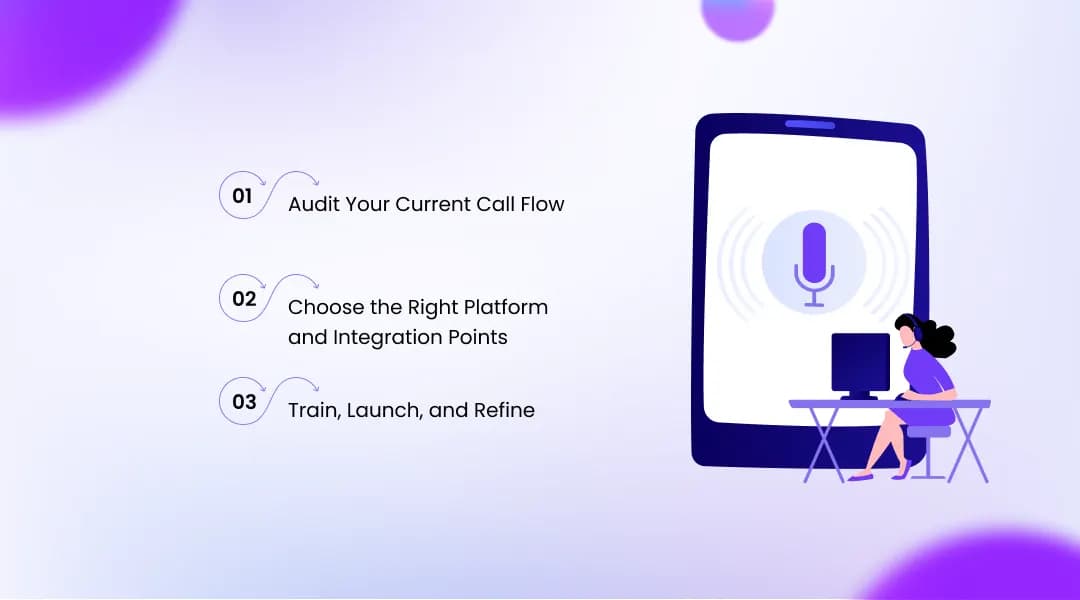
Step 1: Audit Your Current Call Flow
Before deploying any AI system, understand what is actually happening with your phone calls today. Document: what percentage of calls go unanswered, at what times, and for what reasons. Identify your top five call types by volume - typically: reservation requests, availability inquiries, cancellations, directions/hours, and special requests. This audit tells you exactly where AI will have the highest impact, which helps you configure the system correctly and set realistic performance benchmarks.
Most hotels and restaurants discover during this audit that 60-80% of their call volume is routine and highly repeatable. That is the volume AI handles best, and it is almost always more than operators expect.
Step 2: Choose the Right Platform and Integration Points
Evaluate voice AI platforms against three criteria: native integration with your PMS or reservation system, multilingual capability relevant to your guest profile, and the quality of their human handoff logic. A system that cannot transfer smoothly to a human when needed is not a safe deployment for hospitality.
At OnDial, our approach is to start with a deep discovery of the property's communication stack before recommending or configuring any solution. The technology should fit your operation - not the other way around. We build tailored voice AI solutions that connect to your specific systems, speak in your brand's tone, and improve over time with real interaction data from your property.
Step 3: Train, Launch, and Refine
The initial training phase loads your AI with property-specific data: room types, rates, policies, FAQs, menu items, and escalation rules. Most modern platforms deploy in under 30 minutes for a basic configuration, though a properly tailored implementation - the kind that handles complex conversation flows confidently - benefits from two to four weeks of structured setup and testing.
After launch, review call transcripts and performance metrics weekly. The most valuable insight is often not what the AI handles well - it is the calls where it escalates or fails, because those reveal gaps in the knowledge base or edge cases in your policies that the system needs to learn. Continuous refinement is what separates a tool that stays useful from one that plateaus at mediocre.
Conclusion
AI booking calls for hotels and restaurants are no longer a forward-looking investment - they are the operational baseline that competitive properties are building right now. The core problem is simple: calls are being missed at the exact moments when revenue is on the line. The technology to solve it exists, it integrates with the systems you already use, and the results in the market are measurable.
Three things to take away from this guide. First, up to 40% of hotel calls go unanswered - that is a revenue problem, not a staffing problem, and AI solves it directly. Second, proper integration with your PMS or reservation system is what separates genuinely useful AI from expensive voicemail. Third, the best implementations treat AI as a way to protect your team's capacity for human hospitality - not replace it.
Hotels and restaurants using AI voice assistants are capturing direct bookings at 2 AM, handling multilingual guests without specialist staff, and freeing their teams to focus on the guests standing right in front of them. That is the real value: not the technology itself, but what your team can do when the phone is no longer a burden.
If you are ready to see what this looks like for your specific property, OnDial builds tailored conversational voice AI solutions designed around your operations - not generic deployments that require you to adapt to the technology. Start a conversation with our team atOnDial and let's map out what 24/7 AI booking call handling would look like for your hotel or restaurant.