Let me start with something blunt.
Most businesses don’t actually know what they’re buying when they say “we need AI.”
They say chatbot. They mean automation. They expect magic.
And then reality hits.
I’ve seen companies spend months implementing chatbots… only to realize their customers still prefer calling. I still prefer talking. Still drop off when things feel robotic.
So here’s the real question:
Are you solving a customer problem or just installing a trendy tool?
Because AI voice agents and chatbots are not the same thing. Not even close.
Why Customer Experience Matters More Than Ever
Attention spans are shrinking. Patience? Already gone.
If your customer has to wait… they leave. If they don’t feel understood… they leave faster.
Especially in India, where:
Customers prefer voice over typing
Language diversity is massive
Trust is built through conversation, not clicks
I’ve watched this shift happen in real-time. Businesses that relied only on chat interfaces started losing high-intent users.
Why?
Because typing is effort. Talking is natural.
And that’s where voice AI for customer experience starts changing the equation.
How AI Voice Agents Improve Customer Experience
Let’s simplify it.
A chatbot reads. An AI voice agent listens, understands, and responds like a human.
That difference? It’s everything.
24/7 Instant Response
No queues. No delays. No “we’ll get back to you.”
AI voice agents answer instantly—whether it’s 2 PM or 2 AM.
And not just answer… they handle conversations.
Reduced Wait Time
You know what kills conversions?
Waiting.
I’ve analyzed call center data where 30–40% of users dropped before connecting to a human agent. That’s not a tech problem. That’s a business leak.
AI call automation in India fixes that instantly.
Calls are picked up. Handled. Resolved.
No hold music. Ever.
Personalized Conversations
Here’s where most people underestimate AI.
Modern conversational AI voice agents don’t just respond—they adapt.
They remember context. They understand intent. They adjust tone.
A returning customer doesn’t want to repeat themselves. And now, they don’t have to.
Multilingual Support (India Advantage)
India isn’t one language. It’s dozens.
Hindi. Gujarati. Tamil. Marathi. English.
Now imagine hiring agents fluent in all of them.
Expensive, right?
AI voice agents handle multilingual conversations without friction. This is where they quietly outperform chatbots, especially in regional markets.
Consistent Customer Interaction
Humans get tired. Frustrated. Inconsistent.
AI doesn’t.
Every interaction follows your defined experience. Every time.
And that consistency? It builds trust faster than you think.
Top Benefits for Indian Businesses
Let’s move from theory to impact.
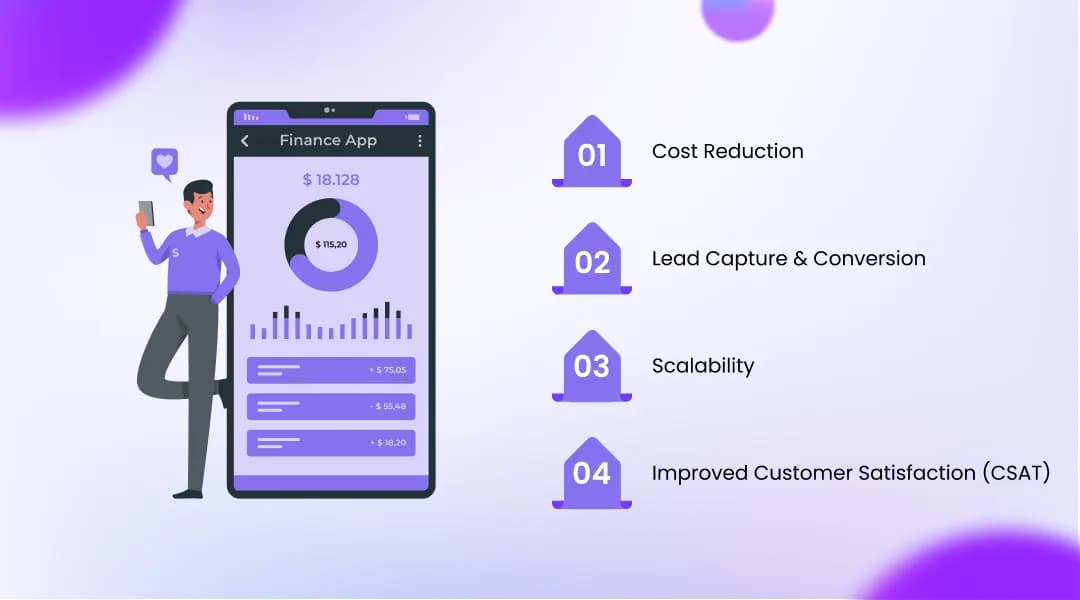
Cost Reduction
Hiring, training, managing support teams, it adds up.
AI voice agents reduce dependency on large teams while maintaining quality.
I’ve seen companies cut operational costs by 40% within months. Not by replacing humans entirely, but by removing repetitive work.
Lead Capture & Conversion
Here’s a question.
How many leads are you losing after business hours?
Most businesses don’t track this. They should.
An AI voice assistant can qualify leads, ask the right questions, and even schedule follow-ups, automatically.
Scalability
Traffic spikes? Campaign success? Festival season?
AI doesn’t panic.
It scales instantly. Whether it’s 10 calls or 10,000.
Try doing that with a human team overnight.
Improved Customer Satisfaction (CSAT)
Fast response + personalization + no waiting = better experience.
Better experience = higher CSAT.
It’s not complicated. It’s just rarely executed well.
Real Use Cases in India
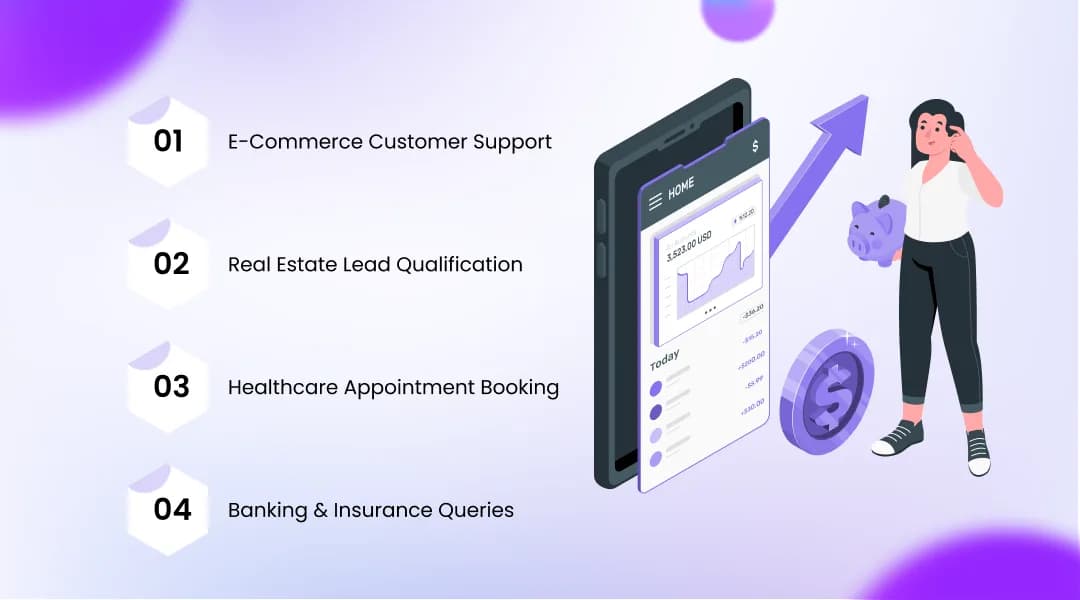
Let me ground this in reality.
E-commerce Customer Support
Order tracking. Returns. Delivery updates.
AI voice agents handle these instantly, freeing human agents for complex issues.
Real Estate Lead Qualification
Every missed call = missed deal.
AI call agents answer inquiries, capture requirements, and qualify leads before passing them to sales teams.
Healthcare Appointment Booking
Patients call. They want quick answers.
AI voice systems book appointments, send reminders, and reduce no-shows.
Banking & Insurance Queries
Policy details. Claim status. FAQs.
Handled. Efficiently. Without long queues.
AI Voice Agents vs Human Support
Let’s address the elephant in the room.
Are AI voice agents replacing humans?
No.
They’re replacing inefficiency.
Humans should handle:
Complex queries
Emotional conversations
High-value interactions
AI should handle:
Repetitive tasks
First-level support
High-volume queries
It’s not a replacement. It’s distribution.
Challenges & Limitations of AI Voice Agents
Let’s not pretend this is perfect.
Because it’s not.
Complex emotional scenarios still need humans
Poor implementation leads to robotic experiences
Training data quality matters (a lot)
I’ve seen bad deployments. And they fail hard.
This isn’t plug-and-play. It’s strategy + execution.
How to Choose the Right AI Voice Agent for Your Business
Don’t start with features.
Start with this:
What problem are you solving?
Then evaluate:
Customization capability
Language support
Integration with your systems
Real conversation quality (not demos)
And most importantly, choose a partner, not just a vendor.
Conclusion
Let me simplify everything we’ve discussed.
Chatbots are useful. AI voice agents are transformative.
If your customers prefer typing, use chatbots.
If your customers prefer talking (and in India, they do)… then voice is your edge.
This isn’t about technology.
It’s about how humans prefer to communicate.
And the businesses that understand that?
They don’t just respond faster.
They connect better.