I’ve sat in rooms where customer support teams looked defeated.
Not lazy. Not incompetent. Just… overwhelmed.
Hundreds of calls. Repetitive queries. Angry customers waiting. And leadership asking, “Why is response time still so high?”
Here’s the uncomfortable truth: Most communication systems weren’t built for scale. They were patched together.
Then came AI voice automation. And suddenly, everyone started calling it “the future.”
I didn’t buy it at first.
Because I’ve seen tech promises crash hard.
But this one? It’s different. Not perfect. But different in a way that actually solves something real.
Let’s break it down.
What is AI Voice Automation?
At its core, AI voice automation is exactly what it sounds like: Using artificial intelligence to handle voice-based interactions without human intervention.
But that definition is… shallow.
Here’s what actually matters:
It combines:
Speech recognition AI (understanding what users say)
Natural language processing voice (understanding intent)
Conversational AI voice (responding naturally)
Together, they create AI voice agents that can:
Answer calls
Resolve queries
Route conversations
Even make outbound calls
Not scripts. Not rigid flows.
Real conversations. (Well… almost real.)
Evolution of Business Communication
Traditional Call Centers
You hire people. Train them. Add shifts.
Then volume increases.
So you hire more.
And more.
And suddenly your biggest cost center is… talking.
IVR Systems
“Press 1 for support. Press 2 for billing.”
We all know this pain.
IVRs reduced workload, but destroyed user experience.
Rigid. Frustrating. Slow.
AI Voice Agents (Modern Shift)
Now?
Users just say what they want.
No buttons. No menus.
And the system understands.
That’s the shift.
From structured commands → natural conversations.
Key Benefits of AI Voice Automation
Let’s not romanticize this. You’re here for results.
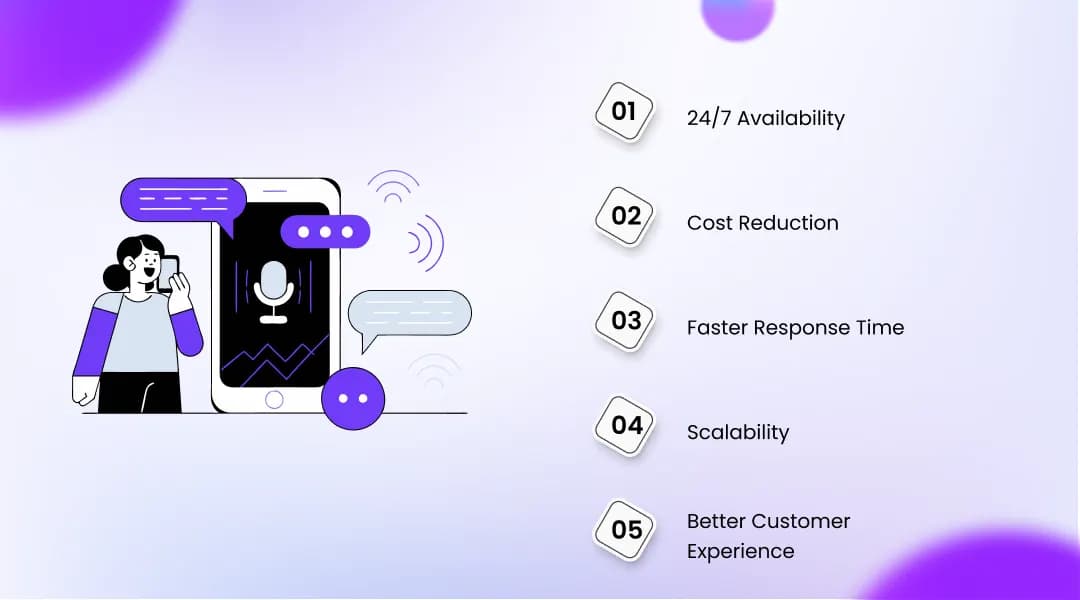
24/7 Availability
No shifts. No burnout.
Customers call at 2 AM? Handled.
Cost Reduction
This is where executives lean forward.
AI call automation can reduce operational costs significantly, especially for high-volume support teams.
But here’s the nuance: It’s not about replacing humans. It’s about removing repetitive work.
Faster Response Time
No queues. No waiting music.
Instant interaction.
And that alone can change how customers perceive your brand.
Scalability
Black Friday traffic spike?
Doesn’t matter.
AI voice systems don’t panic.
Better Customer Experience
Surprisingly… yes.
Because people don’t actually want to talk to humans.
They want fast answers.
Use Cases of AI Voice Automation
Let me make this practical.
Customer Support
Answer FAQs. Resolve basic issues. Route complex ones.
Sales & Lead Qualification
AI phone agents can qualify leads before your sales team even touches them.
Imagine your SDR team only talking to high-intent prospects.
That’s not efficiency. That’s focus.
Appointment Booking
Healthcare, salons, consulting, automated scheduling without human back-and-forth.
Order Tracking
“Where is my order?”
Handled instantly. Every time.
Feedback Collection
Post-call surveys? Automated.
And oddly, people are more honest with machines.
AI Voice Automation in Different Industries
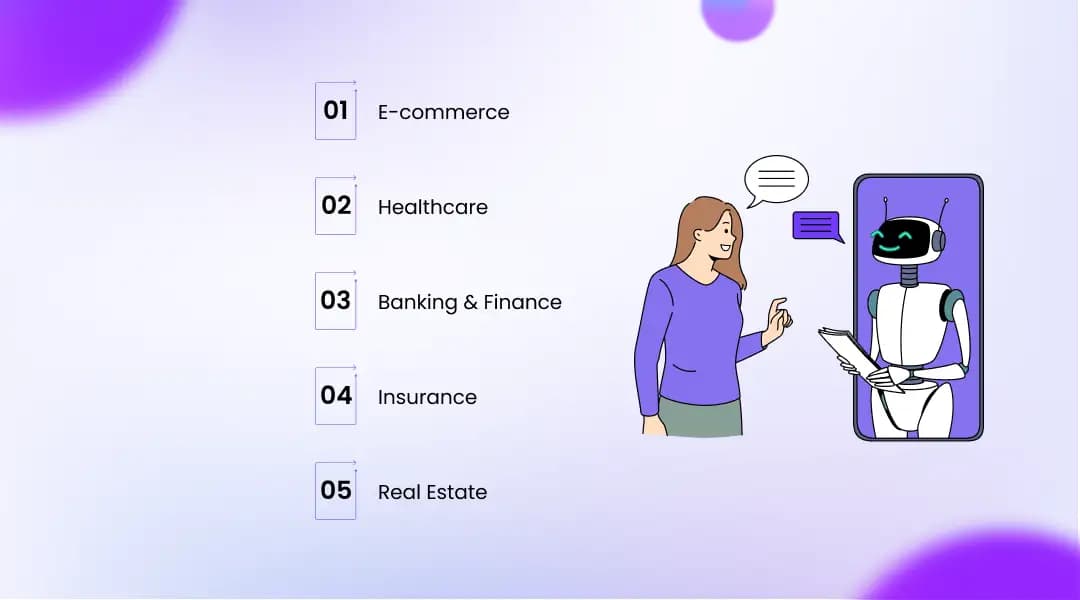
E-commerce
Order support. Returns. Delivery updates.
High volume. Perfect fit.
Healthcare
Appointment scheduling. Patient reminders.
(Though accuracy here isn’t optional. It’s critical.)
Banking & Finance
Balance inquiries. Fraud alerts. Transaction updates.
Security becomes the real challenge.
Insurance
Claims processing. Policy inquiries.
Complex workflows, but high automation potential.
Real Estate
Lead qualification. Property inquiries.
Speed wins deals here.
How AI Voice Agents Improve Customer Experience
Let’s address the elephant in the room.
Do people actually like talking to AI?
Short answer: They like getting things done.
Human-like Conversations
Modern AI voice assistants don’t sound robotic.
They pause. Adapt. Respond contextually.
(Still not perfect. But good enough to pass casual interactions.)
Personalization
Repeat customer?
The system remembers.
Previous interactions. Preferences.
That changes everything.
Instant Resolution
No transfers. No escalations.
Just… answers.
And that’s what users care about.
Challenges & Limitations
Now let’s get honest.
Because this is where most blogs lie.
Accuracy Issues
Speech recognition AI still struggles with:
Accents
Background noise
Complex phrasing
And when it fails, it’s frustrating.
Language Barriers
Multilingual support is improving.
But not universally reliable yet.
Especially in diverse markets like India.
Integration Complexity
Connecting AI voice systems with existing CRMs, databases, workflows?
Not plug-and-play.
This is where most implementations break.
Future of AI Voice Automation
Here’s where it gets interesting.
Hyper-Personalization
Not just remembering names.
Understanding behavior. Predicting intent.
Before the user even finishes speaking.
Multilingual AI Voice
Real-time language switching.
One system. Global reach.
Emotion Detection
Yes, seriously.
AI detecting frustration, urgency, tone—and adapting responses.
Creepy? Maybe.
Useful? Definitely.
Real-Time Decision Making
AI not just answering—but deciding.
Refund approvals. Offer suggestions.
Autonomous communication systems.
Let that sink in.
How to Implement AI Voice Automation in Your Business
This is where most companies mess up.
They start with tools.
Wrong move.
Start with use cases.
Step 1: Choose the Right Platform
Not all conversational AI platforms are equal.
Some are generic. Some are customizable.
Pick based on your complexity.
Step 2: Integration
Connect with:
CRM
Support systems
Databases
Without this, your AI is blind.
Step 3: Training AI
Feed real conversations.
Not ideal scripts.
Reality is messy. Train for that.
Step 4: Monitoring & Optimization
This isn’t “set and forget.”
You need:
Performance tracking
Conversation analysis
Continuous improvement
Otherwise, it degrades.
Conclusion
So… is AI voice automation the future?
Yes. But not in the way most people think.
It’s not about replacing humans.
It’s about removing friction.
I’ve seen companies cut costs. Yes.
But more importantly, I’ve seen them become faster, clearer, and easier to deal with.
And in business?
That’s what wins