I’ve been inside call centers when things go wrong. Really wrong.
Phones lighting up. Queues stretching into eternity. Agents apologizing before the customer even finishes their first sentence. And somewhere in the middle of that chaos, a well-meaning leader says, “Should we look at AI?”
That question is why this article exists.
Because AI voice agents for call centers can be either a quiet operational miracle—or an expensive way to annoy customers at scale. I’ve seen both. And the difference has nothing to do with buzzwords. It has everything to do with design, intent, and brutal honesty about what AI should and shouldn’t do.
Let’s talk like adults.
Why Call Centers Are Turning to AI Voice Agents
Short answer? Volume. Cost. Sanity.
Longer answer: customer expectations quietly exploded while support budgets didn’t.
Customers want instant answers, in their language, at 2:17 AM, without repeating themselves. Call centers want lower AHT, better CSAT, and agents who don’t quit after six months. Those goals collide. Hard.
That’s where AI voice agents enter the picture, not as replacements, but as pressure valves.
And no, this isn’t about removing humans from the equation. It’s about removing the worst parts of the job from humans.
What AI Voice Agents?
Let’s clear something up.
AI voice agents are not robotic IVRs that shout “Press 1 for English” like it’s 2009. They’re also not sentient beings ready to run your support org.
They are:
Conversational systems that understand spoken language
Context-aware responders trained on real workflows
Automated agents that handle predictable Customer Calls at scale
They are excellent at repetition. They are terrible at empathy during edge-case meltdowns.
And that’s okay.
How AI Voice Agents Work in Call Centers
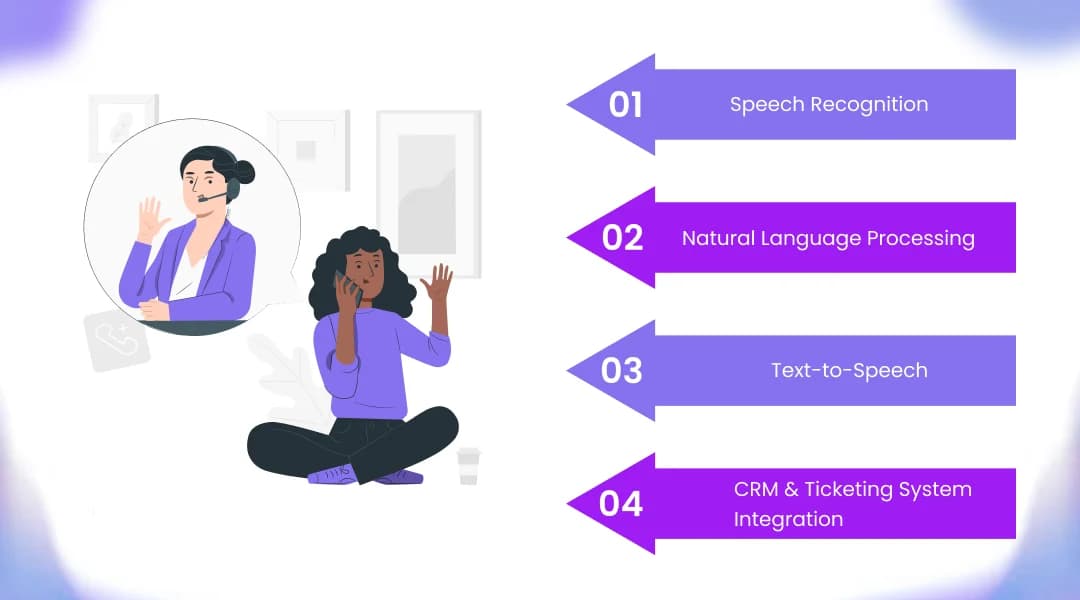
This is where most vendor blogs wave their hands. I won’t.
Speech Recognition (ASR)
Automatic Speech Recognition converts spoken words into text. Modern systems handle accents, speed variations, and noisy lines far better than most humans expect—especially for structured support flows.
Natural Language Processing (NLP)
This layer figures out intent. Not keywords. Meaning. “Where is my order?” and “My package hasn’t arrived” land in the same bucket.
Text-to-Speech (TTS)
The response gets converted back into speech. The quality here matters more than teams admit. Bad voice = instant distrust.
CRM & Ticketing System Integration
This is the real magic. When AI voice agents connect to CRMs, helpdesks, and order systems, conversations stop being generic and start being useful.
No integration? No point.
Key Benefits of AI Voice Agents for Customer Support Teams
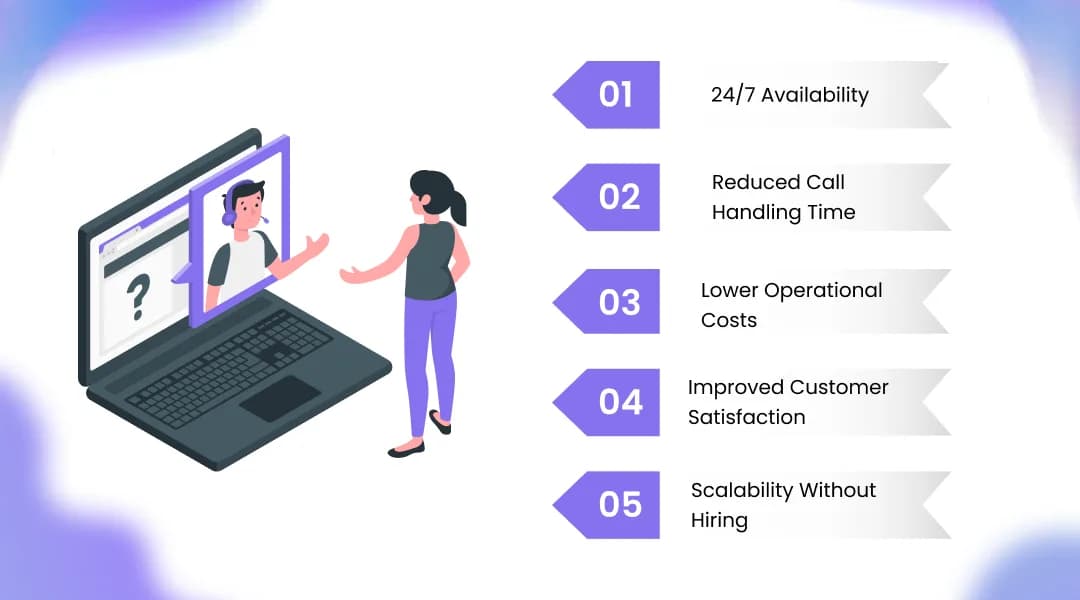
24/7 Availability
Customers don’t care about business hours. AI doesn’t either.
Reduced Call Handling Time
AI voice agents jump straight to resolution. No warm-up. No fatigue.
Lower Operational Costs
Handling high-volume, low-complexity calls with automation saves real money. Not theoretical money. Actual line items.
Improved Customer Satisfaction (CSAT)
Counterintuitive, but true. Fast, accurate answers beat “please hold” every time.
Scalability Without Hiring
Seasonal spikes stop being existential threats.
Top Use Cases of AI Voice Agents in Call Centers
Here’s where voice automation for customer support shines:
Inbound customer support (FAQs, status checks)
Outbound calling & follow-ups (confirmations, surveys)
Appointment booking & reminders
Payment reminders & collections
Order tracking & routine queries
Notice a pattern? Predictable. Repetitive. High-volume.
That’s intentional.
Best AI Voice Agents for Call Centers & Customer Support Teams
I’m not ranking tools like a beauty pageant. Different tools win in different rooms.
OnDial AI Voice Agents
Best for: Enterprises and BPOs needing tailored, human-centric deployments
Features:
Custom conversational flows
Multilingual AI voice agents
Deep CRM & enterprise integration
Strong focus on partnership, not licenses
Pros:
Built for real call center complexity
Flexible customization
Cons:
Not a plug-and-play toy
Google Dialogflow CX
Best for: Tech-heavy teams with internal AI resources
Pros: Powerful NLP Cons: Requires serious configuration effort
Amazon Connect Voice AI
Best for: AWS-native contact centers
Pros: Scales effortlessly Cons: Less friendly for non-AWS teams
Genesys Voice Bots
Best for: Large enterprises with legacy contact center stacks
Pros: Enterprise-grade reliability Cons: Steep learning curve
Talkdesk AI Voice
Best for: Cloud contact centers
Pros: Fast deployment Cons: Limited deep customization
Features to Look for in the Best AI Voice Agent Software
If a vendor skips these, walk away.
Multilingual support
Human-like voice quality
Omnichannel support (voice + chat)
CRM & helpdesk integration
Analytics & call insights
Security & compliance (GDPR, SOC2)
This is where choosing the Best AI Voice Agent Platform actually matters.
AI Voice Agents vs Human Agents: A Smart Hybrid Approach
Let’s settle this.
What AI Handles Best
Repetition
Speed
Scale
Consistency
Where Humans Add Value
Emotional nuance
Complex problem-solving
Relationship repair
The future isn't a replacement. It’s choreography.
AI voice agents handle the front line. Humans step in when things get human.
Industries Benefiting Most from AI Voice Agents
BPO & Call Centers – obvious win
E-commerce – order chaos management
BFSI & Fintech – reminders, verifications
Healthcare – appointments & follow-ups
Telecom & Utilities – outages & billing
Anywhere volume meets urgency, AI voice agents for call centers earn their keep.
Challenges & Limitations of AI Voice Agents
Let’s not pretend otherwise.
Complex queries still break systems
Accent & emotion handling isn’t perfect
Data privacy must be airtight
Training is ongoing, not one-time
AI voice agents are systems, not spells.
Future of AI Voice Agents in Customer Support
What’s coming next?
Emotion-aware AI
Predictive support before customers call
Hyper-personalized conversations
Fully autonomous voice agents for defined workflows
The Role of AI Call Assistants will expand, but cautiously.
Conclusion
I’ve seen AI voice agents save teams. I’ve also seen them wreck trust.
The difference is intent.
When implemented thoughtfully, AI voice agents for call centers don’t replace human connection, they protect it. They give agents breathing room. They give customers faster answers. And they give leaders something rare: predictability.
If you’re serious about doing this right, work with partners who treat AI as infrastructure, not theater. That’s where companies like OnDial quietly stand out.