I still remember the first time a customer yelled at an IVR system I built.
“PRESS 1… PRESS 2… PRESS 3…”
The caller finally shouted into the phone:
"JUST LET ME TALK TO A HUMAN."
That moment stuck with me.
For years, businesses treated phone support like a maze. Customers navigated menus, waited in queues, and repeated the same problem to three different agents.
It was frustrating. For everyone.
Then something changed.
Artificial intelligence started understanding speech the way humans do. Conversations became natural. Context started to matter.
And suddenly, businesses weren't just answering calls anymore.
They were having conversations at scale.
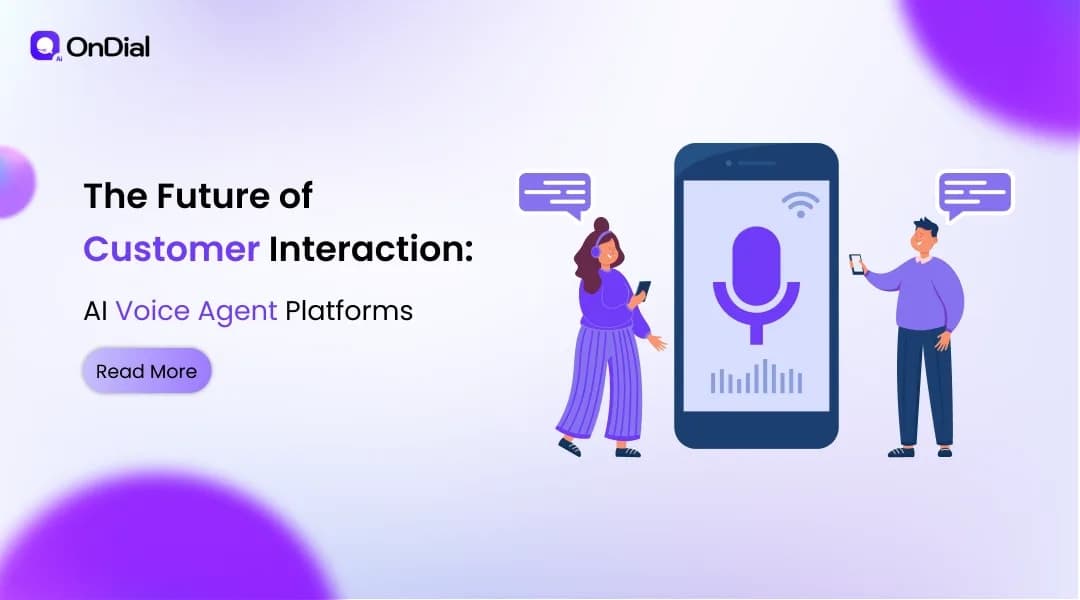
That shift is what we now call an AI Voice Agent Platform.
And trust me, after spending more than a decade designing voice systems, this evolution is bigger than most companies realize.
What is an AI Voice Agent Platform?
An AI Voice Agent Platform is a technology system that allows businesses to deploy intelligent voice assistants capable of handling phone conversations with customers automatically with industry specific AI voice solutions.
Not robotic scripts.
Not rigid IVR menus.
Real conversations.
These platforms combine speech recognition, conversational AI, and automation to manage customer interactions through voice.
Think of it like hiring a digital call agent that can:
Answer incoming calls
Understand customer requests
Respond naturally
Perform tasks (like bookings or order lookups)
Transfer calls when necessary
And here's the part most executives underestimate.
It can handle thousands of calls simultaneously.
No waiting queues. No missed leads.
Just immediate responses.
How AI Voice Agents Work
When people ask me how voice AI actually functions, I usually simplify it into three layers.
Because behind the scenes… it's complex.
But conceptually?
It's beautifully simple.
Speech Recognition Technology
First, the system must hear and understand human speech.
This is where Automatic Speech Recognition (ASR) comes in.
When a customer speaks, the AI converts voice into text in real time.
Example:
Customer says: "I want to check my order status."
The AI converts that audio into structured text.
Milliseconds.
Done.
Accuracy today is dramatically better than what we had even five years ago with AI voice agents for business calls. Accents, noise, fast speech - modern models handle it far better.
Natural Language Processing (NLP)
Next comes understanding intent.
Because recognizing words isn't enough.
The system must understand what the customer actually wants.
Natural Language Processing analyzes the text to determine:
Intent
Context
Key information
Emotional tone
So when a caller says:
"My package hasn't arrived yet."
The AI knows they likely want order tracking support.
This layer is where conversational intelligence lives.
Machine Learning & Conversational AI
Finally, the system generates a response.
But here's the critical detail most articles skip.
Voice AI isn't just answering questions.
It's managing dialogue flow.
Meaning the AI can:
Ask follow-up questions
Clarify unclear requests
Perform backend actions
Continue conversations naturally
All of this is powered by machine learning models trained on large conversation datasets.
And yes — they get better over time.
Why Businesses Are Adopting AI Voice Agents
Let me ask you something.
How many times has your business missed a call after office hours?
Now imagine that call was a high-value lead.
I've seen companies lose thousands in revenue simply because nobody answered the phone.
This is exactly why voice AI adoption is accelerating.
24/7 Customer Support
AI voice agents don't sleep.
They don't take breaks.
They don't need shifts.
Customers can call at midnight, during holidays, or early mornings and still receive immediate support.
For global businesses, this changes everything.
Cost Reduction for Call Centers
Call centers are expensive.
Hiring agents. Training them. Managing turnover.
Operational costs pile up quickly.
Voice AI reduces a significant portion of repetitive interactions such as:
FAQs
order tracking
appointment confirmations
basic troubleshooting
Human agents then focus on complex conversations.
Which is exactly where humans shine.
Instant Customer Response
Customers hate waiting.
Actually - hate might be too polite.
Studies consistently show that response speed directly affects customer satisfaction.
Voice AI eliminates long queues by answering instantly.
No hold music. No frustration.
Scalability for Growing Businesses
Here's a situation I've seen repeatedly with startups.
A marketing campaign works.
Great news… right?
Except suddenly support calls spike.
And the team can't handle the volume.
AI voice systems scale effortlessly because infrastructure expands digitally — not by hiring dozens of agents overnight.
Top Use Cases of AI Voice Agent Platforms
Now let's move from theory to reality.
Where do businesses actually use voice AI today?
Customer Support Automation
The most common use case.
AI voice agents answer common support queries like:
account information
delivery updates
service troubleshooting
billing questions
This dramatically reduces agent workload.
Sales & Lead Qualification
Voice AI can call leads and ask qualifying questions such as:
budget
timeline
service interest
location
Qualified leads then get transferred to sales teams.
This makes AI voice bots for lead generation extremely valuable.
Appointment Booking
Healthcare clinics, salons, and consulting firms receive constant appointment calls.
AI voice agents can:
schedule bookings
reschedule appointments
send confirmations
provide reminders
No receptionist required.
Order Tracking & Notifications
E-commerce companies often receive thousands of order inquiries.
Voice AI can instantly provide:
delivery status
shipping updates
refund details
return instructions
Customers get answers in seconds.
Customer Feedback Collection
Another overlooked use case.
After a purchase or service, AI agents can call customers and collect feedback.
This produces valuable insights while maintaining consistency in surveys.
AI Voice Agents vs Traditional Call Centers
Now let's address the elephant in the room.
Are AI voice agents replacing call centers?
Short answer.
No.
Long answer?
They're transforming them.
Traditional call centers rely entirely on human agents. That means capacity limits.
Voice AI handles repetitive interactions first.
Then complex cases escalate to human agents.
The result is a hybrid support model.
AI manages volume.
Humans handle nuance.
That's the future of customer communication.
Key Features of a Powerful AI Voice Agent Platform
Not all platforms are equal.
Some are glorified IVR systems pretending to be AI.
A truly capable platform includes several critical features.
Natural sounding conversations
Customers should feel like they are speaking with a knowledgeable assistant - not a robot.
CRM integrations
Voice systems must connect with business tools such as CRM databases, support software, and internal systems.
Multilingual support
Global businesses require voice AI that can communicate across multiple languages and accents.
Real-time analytics
Businesses need visibility into conversations, performance metrics, and customer behavior.
Smart call routing
If AI cannot resolve a request, it should transfer calls to the right human agent instantly.
Industries Benefiting from AI Voice Automation
Voice AI adoption spans multiple industries.
But several sectors are seeing particularly strong benefits.
E-commerce
Order inquiries and delivery updates.
Healthcare
Appointment scheduling and patient reminders.
Real Estate
Property inquiry handling and lead qualification.
Banking & Finance
Account queries and transaction support.
SaaS Companies
Customer onboarding and technical support calls.
Basically, any business that receives frequent phone inquiries can benefit.
Challenges & Limitations of Voice AI
Let's be honest for a moment.
Voice AI isn't perfect.
Yes, it's powerful. But there are limitations.
Complex emotional conversations still require humans.
Certain accents or noisy environments can reduce recognition accuracy.
And poorly designed conversation flows create frustrating experiences.
I've seen companies deploy voice AI too quickly — without proper training data.
The result?
Confused customers.
Angry support teams.
Technology alone isn't the solution.
Thoughtful implementation is.
The Future of AI Voice Agents in Business Communication
Something interesting is happening right now.
Customers are becoming comfortable speaking with AI.
Not because companies forced them.
Because the experience is improving.
Rapidly.
Modern voice AI systems can:
detect emotions
understand context
personalize conversations
integrate with business systems
In the next few years, voice agents will likely become the first touchpoint for most customer interactions.
Not the only one.
But the first.
And businesses that adopt early will have a significant advantage.
Conclusion
Customer communication has always evolved with technology.
From in-person service… to phone calls… to live chat.
Now voice AI is adding a new layer.
An AI Voice Agent Platform allows businesses to scale conversations without sacrificing responsiveness.
But success doesn't come from technology alone.
It comes from designing systems that actually respect the customer's time and intent.
That part?
Still requires human thinking.