Here is the number that should keep every founder awake: 63% of consumers will switch to a competitor after a single bad experience, according to Zendesk's CX Trends research. One call. One long hold. One unanswered question. That is all it takes for a customer you paid to acquire to quietly become someone else's customer.
AI voice agents for customer retention exist to close that gap. They answer instantly, at any hour, and they reach at-risk customers with a personal phone call at the exact moment attrition risk spikes, which is something a stretched human team physically cannot do at scale. If you are anxious about a churn rate that keeps creeping up while acquisition costs climb, you are not imagining the squeeze. The math has genuinely turned against businesses that treat retention as an afterthought.
I have spent years at OnDial building voice AI for companies fighting exactly this battle. This guide breaks down how AI voice agents actually retain customers, what the real numbers say, where the technology shines, and where it honestly falls short.
What Are AI Voice Agents (and Why Retention Became a Voice Problem)
Most articles will hand you a dictionary definition and move on. I want to start somewhere more useful: with why retention quietly became a voice channel problem in the first place.
A Working Definition You Can Actually Use
An AI voice agent is software that holds a natural spoken phone conversation, understands intent without menu trees, pulls live context from your CRM, and resolves the issue or hands off to a human. Unlike the rigid "press 1 for billing" systems of the past, these agents adapt mid-sentence when a customer changes direction.
They run on three layers working together. Speech recognition converts what the caller says into text, large language models interpret intent and decide the next step, and text-to-speech turns the reply back into natural audio with voice AI beyond static call scripts. Every action gets logged to a CRM, calendar, or support desk in real time. That live data connection is the difference between a genuine AI voice agent for customer service and a glorified answering machine.
Why Your Best Customers Leave Quietly
Churn rarely announces itself. It shows up as a missed renewal, a support ticket that never got a callback, or a subscription that lapses without a single complaint. The uncomfortable truth is that most dissatisfied customers never tell you they are unhappy. They simply stop.
That silence is the real enemy. When a person waits on hold, gets transferred twice, and repeats their account number to three agents, they rarely file a complaint. They just start comparing alternatives. Voice is where that frustration builds, and until recently, voice was the one channel you could not scale without hiring more people.
How Do AI Voice Agents Reduce Customer Churn?
Let me get straight to the mechanism, because this is the question everyone actually types into Google.
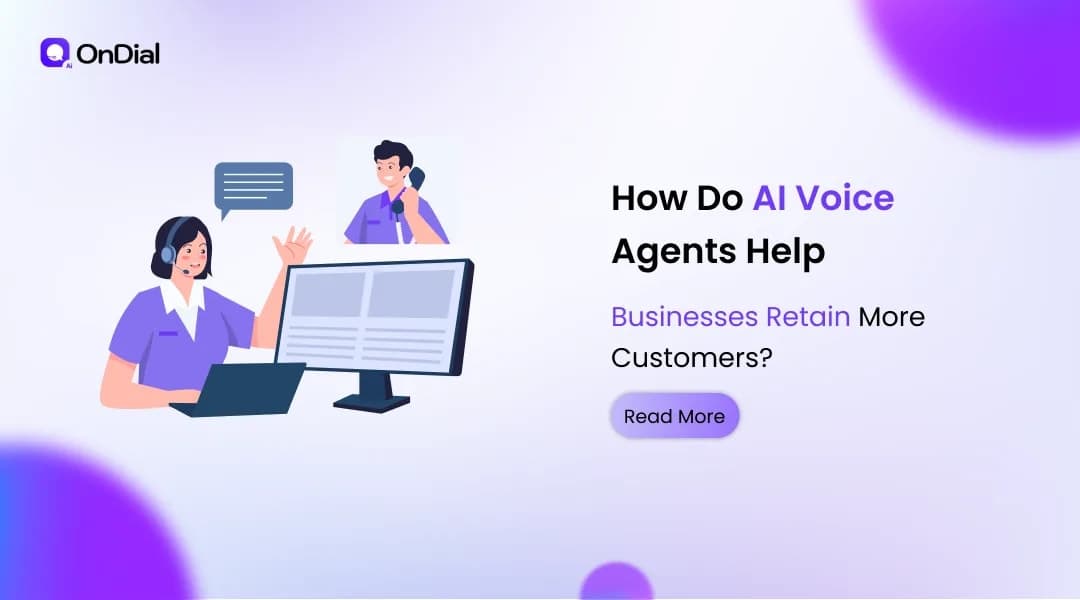
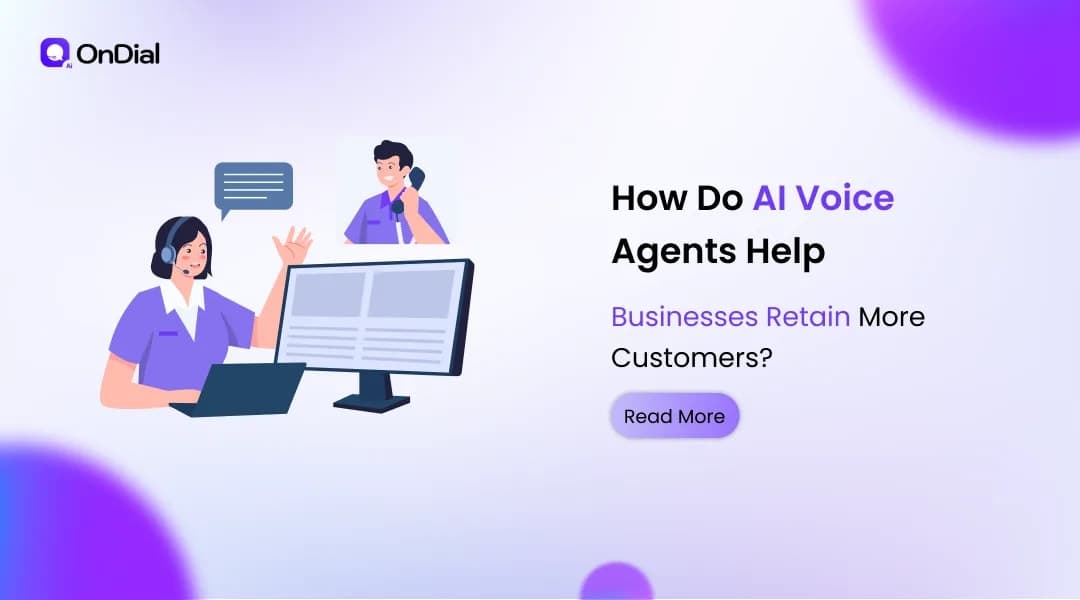
AI voice agents reduce customer churn by resolving issues faster on first contact, detecting frustration through real-time sentiment analysis, and triggering proactive retention calls to at-risk customers before they decide to cancel. They convert scattered service data into a retention action while there is still time to act.
From Reactive Firefighting to Proactive Care
The old model waits for the phone to ring, which means you only hear from customers who are already frustrated enough to complain. Proactive service flips that. AI agents initiate outbound check-ins the moment a risk signal appears, whether that is a dropped satisfaction score, a failed payment, or three weeks of no product usage.
This shift matters more than any feature. Research from Totango found that retention interventions are three times more effective when initiated before the customer contacts you to cancel, with AI voice agents for customer retention. Waiting for the cancellation call means you are negotiating with someone who has already made a decision. Reaching out first means you are solving a problem they had not yet given up on.
Catching Signals Humans Miss
An AI voice agent monitors every single interaction, not a random 2% sample. It flags recurring issues, declining sentiment, and language patterns that hint at a customer preparing to leave. One SaaS company reduced churn by 15% using sentiment-based escalation, identifying at-risk customers during ordinary support calls and stepping in with extra help.
The scale here is the point. Companies using AI-driven churn prediction report 25% to 30% reductions in attrition, according to reporting from MindStudio. Your team cannot listen to every call. The agent can.
The Retention Window: Why Timing Beats Everything Else
Here is the counterintuitive part that most guides skip entirely. The biggest lever in retention is not what you say to an at-risk customer. It is how fast you reach them.
The 30-Minute Problem
Churn analytics vendors consistently find that the highest save probability sits inside the first 30 minutes after a cancellation request or a failed payment. After that, the odds fall off a cliff. Every single day of delay after a churn signal reduces the probability of a successful save by roughly 8% to 12%, based on data reported by voice AI platforms running these campaigns.
Now do the math on a human save desk. Picture 4,000 at-risk accounts flagged on a Monday morning. A human team working on spreadsheets of risk scores cannot dial all of them within a 30-minute window without ballooning headcount with OnDial. Most of those calls go out hours or days late, well after the save window has closed.
Why AI Owns This Window
This is where AI voice agents create value no human team can match. A modern voice AI system can run thousands of concurrent outbound calls, reference each customer's plan, tenure, and last support ticket, and warm-transfer the high-stakes conversations to a human specialist with full context. It hits every at-risk account inside the window, every time.
The results back this up. Subscription businesses report win-back recovery rates of 40% to 55% on AI-driven campaigns, compared with 15% to 25% for human-only outreach, according to Fini Labs. Same signal, same offer. Different timing. That is the whole story.
Five Ways AI Voice Agents Help Businesses Retain More Customers
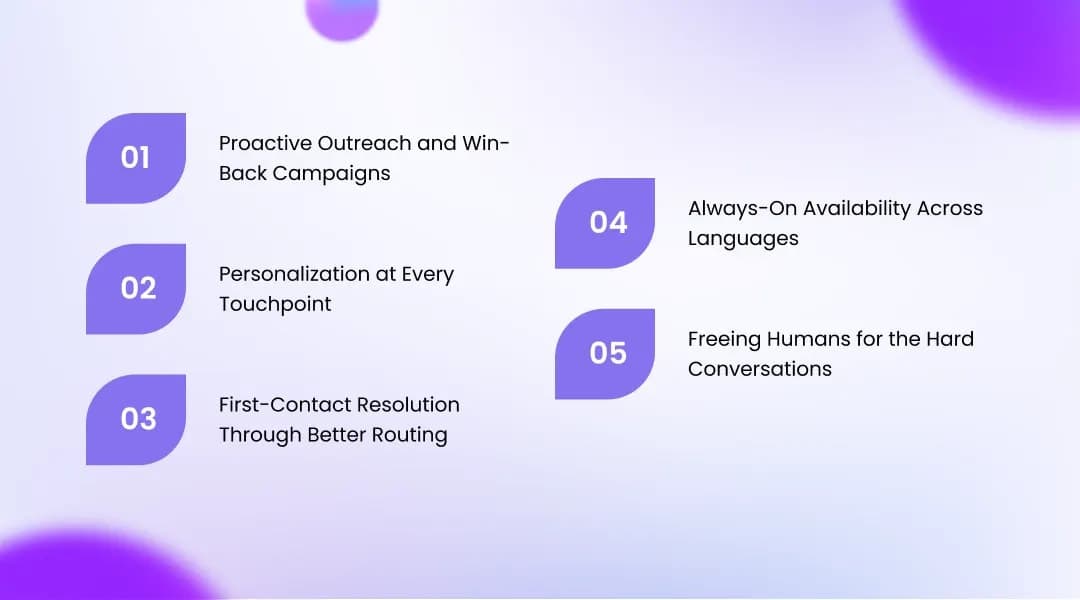
Customer retention automation is not a one-trick. It is a stack of coordinated moves that each close a specific leak in your bucket. Here is how the pieces fit together.
Proactive Outreach and Win-Back Campaigns
AI agents trigger outbound calls when a churn score crosses a threshold, then reference the customer's actual situation. A greeting like "Hi Marcus, I noticed you have not used your dashboard in three weeks" reads as care, not a sales pitch. For customers who already left, win-back campaigns timed 30 to 60 days after cancellation catch them after they have felt the absence but before they fully commit elsewhere.
Personalization at Every Touchpoint
Roughly two-thirds of customers feel frustrated when interactions are not tailored to them, per IBM research. AI voice agents greet callers by name, recall past issues, and adjust tone to match the person. This builds the small sense of being known that quietly makes switching feel like a loss.
First-Contact Resolution Through Better Routing
Getting a caller to the right resource on the first attempt is the highest-impact retention action in a contact center with Call Centers AI voice agents. AI agents recognize intent in natural speech and skip the numbered menu maze entirely. Shorter calls, higher satisfaction, and fewer people abandoning the queue follow directly from that.
Always-On Availability Across Languages
Customers do not keep business hours, and neither should your support. AI voice agents deliver 24/7 service and hold native-quality conversations across many languages and dialects. For a market as diverse as India, where OnDial builds multilingual voice AI, this is the difference between a customer feeling served and feeling shut out.
Freeing Humans for the Hard Conversations
When AI absorbs routine calls, your best agents stop drowning in password resets and start handling the high-empathy conversations that need a person. One deployment saved a service team 40% of its time while reaching 20% more customers, per Telli's reporting on the Enpal case. Less burnout means lower agent turnover, and consistent staff means a more consistent experience.
What AI Voice Agents Cannot Fix
I would be doing you a disservice if I pretended this technology solved everything. It does not, and the honest limitations matter.
Bad Product, Bad Pricing, Bad AI
A voice agent cannot save a customer who is leaving because your product genuinely does not deliver value or a competitor is simply cheaper. Salesforce research found that many customers switch for better deals and better product quality, not service failures. No amount of pleasant conversation fixes a broken core offering.
Deploying badly carries real risk too. An agent that hallucinates discount codes, misroutes a VIP account, or sounds like a 2014 phone tree does more damage than no agent at all. Compliance matters as well, since outbound retention calling sits under rules like TCPA in the US and DLT and DPDP in India, with agents customer retention. The technology multiplies your strategy; it does not replace having one.
Conclusion
AI voice agents for customer retention work because they solve the three things that quietly kill loyalty: slow response, missed warning signs, and reaching people too late. They resolve issues on first contact, catch frustrations humans never hear, and hit the narrow save window when it actually matters. That combination turns retention from a reactive scramble into a system you can trust.
You do not have to accept a rising churn rate as the cost of doing business. The tools to catch at-risk customers early and keep them are here, proven, and running today. If you want to see what a proactive retention agent sounds like on your own at-risk accounts, the OnDial team can map your churn signals to a multilingual voice workflow built around your customers, not a generic script. Start with one call type, measure the save rate, and grow from there.